 Sobrelias Revista Digital del vino y el enoturismo

A Sensory Guide
Art of Tasting
White Wine
From the first glance to the lingering finish — a journey through the senses
Whether you are exploring a crisp Sauvignon Blanc from the Loire Valley, a honeyed Viognier from the northern Rhône, or a mineral-driven Chablis, the same fundamental approach applies. The goal is not to judge, but to understand.
Setting the Stage
The Right Conditions
Before you even uncork the bottle, context matters. White wines are best served chilled, though the ideal temperature varies by style. A full-bodied, oak-aged Chardonnay benefits from being served slightly warmer — around 12 to 14°C — while a delicate Pinot Grigio or Muscadet is best enjoyed at 8 to 10°C. Serving wine too cold mutes its aromas; too warm, and the alcohol can dominate the experience.
Choose a glass with a tulip-shaped bowl that narrows slightly at the rim. This design concentrates the wine’s aromas toward your nose as you lift it to your mouth. Fill the glass no more than one third — the empty space above the wine is essential for the aromatics to develop.
The Environment
Eliminate distracting scents: perfume, cooking odors, or even strong coffee can interfere with your ability to detect the wine’s aromas. Good natural lighting helps you observe the wine’s color with accuracy. A clean white background — a sheet of paper, a tablecloth — makes this easier.
The Visual Examination
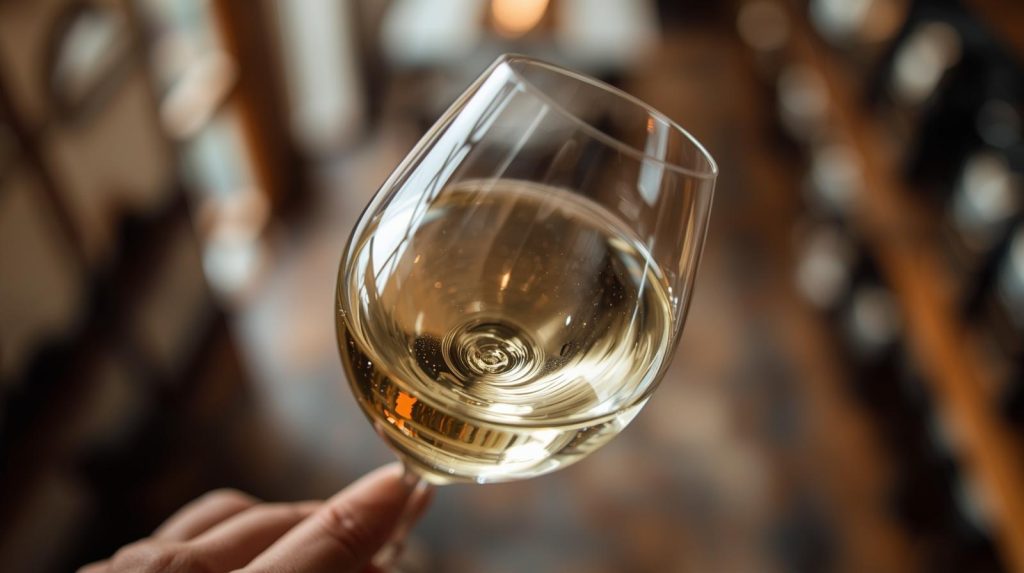
Hold the glass by the stem to avoid warming the wine with your hand, then tilt it at a 45-degree angle against a white background. Begin your observation.
Color and Intensity
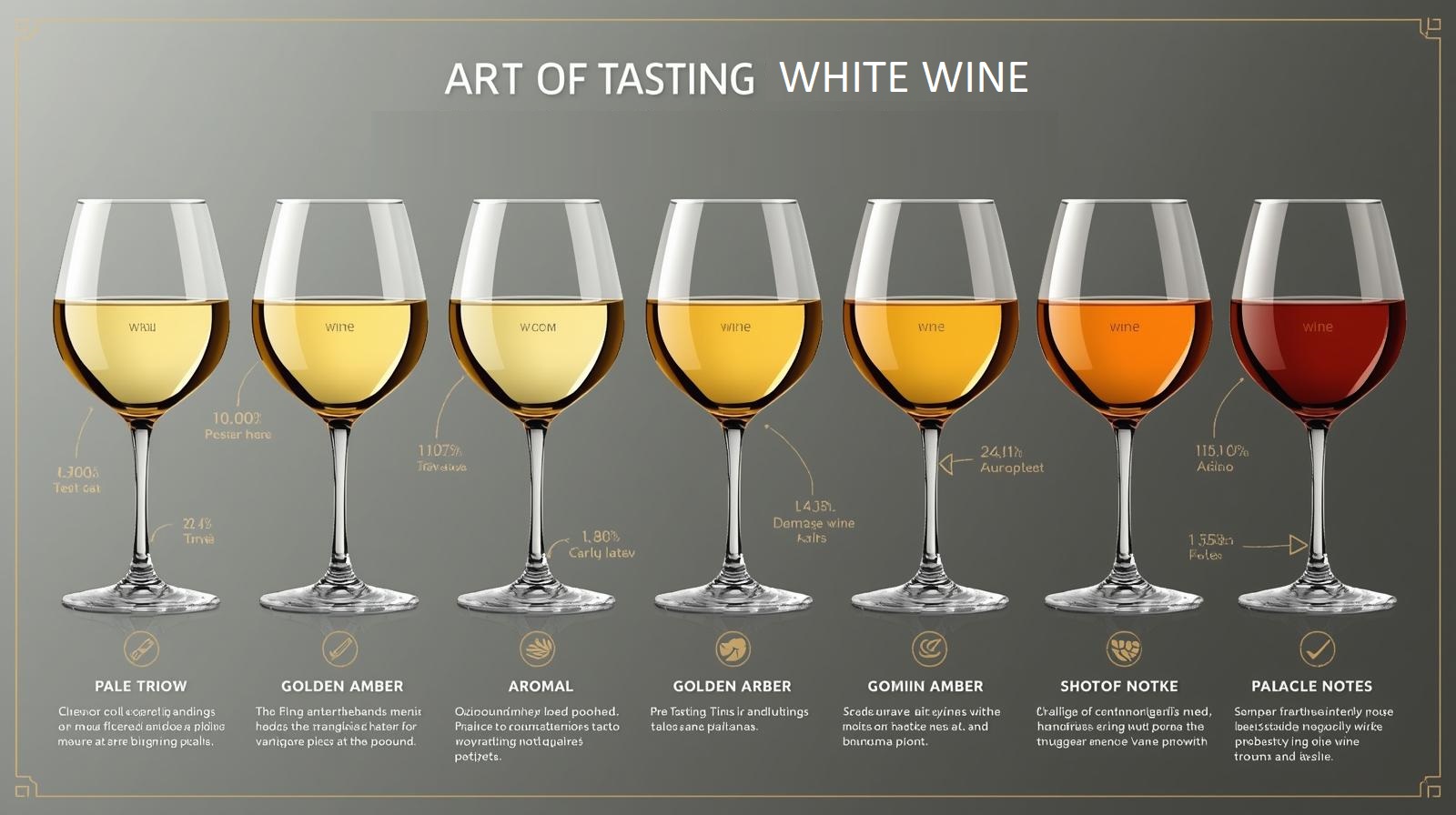
White wines range from the palest straw and lemon-green to deep amber and gold. The depth of color offers your first clues about the wine’s age, body, and winemaking style.
Pale Straw / Green
Young wine, cool climate. Sauvignon Blanc or Pinot Grigio.
Lemon Yellow
Classic, neutral. Moderate age, wide range of varieties.
Golden Yellow
Oak ageing, botrytis, or warmer climate grapes.
Deep Amber
Extended ageing, oxidative winemaking, or orange wine style.
Clarity and Viscosity
A well-made white wine should be clear and brilliant. A slight haziness may indicate an unfiltered natural wine — not necessarily a flaw, but worth noting. Swirl the glass gently and observe the ‘legs’ or ‘tears’ that trail down the inside. Thicker, slower-moving legs suggest higher alcohol or residual sugar.
The Nose — Olfactory Exploration
The nose is where wine truly reveals its soul. Take your time here — the aromas tell the story of the grape, the terroir, and the hands of the winemaker.
Primary Aromas
Swirl the wine vigorously for ten seconds to open up the aromatics, then bring the glass to your nose and take a long, slow inhale. Your first impressions will be dominated by primary aromas — those that come directly from the grape variety itself.
These include fruit notes such as citrus (lemon, lime, grapefruit), stone fruit (peach, apricot, nectarine), tropical fruits (pineapple, mango, passion fruit), and orchard fruits (apple, pear, quince). You may also detect floral notes like jasmine, orange blossom, elderflower, or acacia, as well as herbaceous notes such as cut grass, green pepper, or fresh herbs.
Secondary Aromas: The Winemaking
Secondary aromas emerge from the fermentation process. In white wines, the most notable come from malolactic fermentation — a process that converts sharp malic acid into softer lactic acid. Wines that undergo this process (many Chardonnays, for instance) develop creamy, buttery, or brioche-like aromas. You might also detect yeasty notes reminiscent of bread dough or toast.
Tertiary Aromas: The Evolution of Time
Tertiary aromas, also called ‘bouquet,’ develop as the wine ages in barrel and bottle. These are often the most complex and intellectually rewarding. Look for honeyed notes, beeswax, dried fruits, roasted nuts such as almond or hazelnut, vanilla, caramel, toast, and the characteristic petrol note found in mature Riesling. Earthy notes — wet stone, flint, chalk, and mushroom — also emerge in aged examples.
The Palate — The Full Experience
Take a generous sip and resist the urge to swallow immediately. Let the wine coat your entire palate. Some tasters use a technique called ‘aspiration’ — drawing a thin stream of air through the wine between parted lips — to amplify the aromatic compounds. Now begin your systematic assessment.
Sweetness
The tip of your tongue detects sweetness first. Most white wines are dry or off-dry, but a slight impression of sweetness can come from residual sugar, ripe fruit flavors, or the texture of glycerol. Wines labelled demi-sec, spätlese, or late harvest will carry more obvious sweetness.
Acidity
Acidity is the backbone of white wine. You will feel it primarily on the sides of your tongue and as a pronounced salivation response — the wine makes your mouth water. Acidity provides freshness, balance, and the ability to age gracefully. Wines from cool climates (Chablis, Loire, Mosel) tend to have higher acidity, while those from warmer regions (California, Southern Rhône) can feel softer and rounder.
Body and Texture
Body refers to the weight and richness of the wine on your palate — comparable to the difference between skim milk and whole cream. Light-bodied whites feel delicate and refreshing; full-bodied examples (like a barrel-fermented Chardonnay) feel weighty, viscous, and mouth-coating. Texture also encompasses the sensation of tannin — rare in white wines but present in skin-contact or orange wines — and the creaminess imparted by extended lees contact.
Alcohol
Alcohol creates a warming or even burning sensation at the back of the throat. In a balanced wine, this warmth integrates seamlessly with the fruit and acidity. In a poorly balanced wine, the alcohol stands out uncomfortably. Most white wines range from 11% to 14.5% alcohol, though some Alsatian Vendange Tardive and Riesling Auslese can dip below 10%.
Finish
The finish — also called the aftertaste — is the impression the wine leaves after you have swallowed. Count the seconds: a short finish lasts only a few seconds; a long finish can persist for thirty seconds or more and is a hallmark of exceptional quality. Pay attention to what flavors linger. Do you taste citrus peel, mineral salinity, or warm spice? The complexity of the finish often tells you more about quality than any other single attribute.
Balance & Overall Assessment
Great white wine is defined by balance — the harmonious interplay of fruit, acidity, sweetness, body, and alcohol. No single element should dominate. A wine with searing acidity but no fruit feels thin and aggressive; a wine with abundant fruit but low acidity feels flat and cloying. When all elements are in equilibrium, the result is a wine that feels seamless, precise, and alive.
The greatest wines have a kind of tension — opposing forces held in perfect balance, creating a dynamic that evolves in the glass and changes with every sip.
When making your overall assessment, consider the wine’s typicity — does it express its grape variety and origin clearly and convincingly? Does it have personality and character? Would you want another glass? These simple questions, combined with your systematic tasting notes, form the basis of a complete evaluation.
Key Varieties & Their Signatures
Each grape variety carries its own fingerprint of aromas, acidity, and texture. Recognizing these signatures is one of the great pleasures of building wine knowledge.
| Grape Variety | Signature Aromas | Key Regions |
|---|---|---|
| Chardonnay | Apple, butter, vanilla, toast, hazelnut | Burgundy, Chablis, Champagne, Napa Valley |
| Sauvignon Blanc | Grapefruit, grass, nettle, elderflower, gooseberry | Loire Valley, Marlborough, Bordeaux |
| Riesling | Lime, apricot, petrol, slate, honey | Mosel, Alsace, Clare Valley, Rhine |
| Viognier | Peach, apricot, jasmine, orange blossom | Condrieu, Rhône Valley, South Australia |
| Pinot Grigio / Gris | Pear, almond, ginger, smoke (Gris); crisp apple (Grigio) | Alsace, Friuli, Veneto, Oregon |
| Gewurztraminer | Lychee, rose petal, clove, ginger, marzipan | Alsace, Alto Adige, Pfalz |
| Albariño | Lime, peach, saline, floral, green almond | Rías Baixas, Vinho Verde |
| Grüner Veltliner | White pepper, celery seed, grapefruit, lime | Wachau, Kamptal, Kremstal (Austria) |
Building Your Vocabulary
Developing a personal lexicon for wine tasting takes time and practice. The Wine Aroma Wheel, originally developed by Ann C. Noble at UC Davis, remains an invaluable reference tool, organizing aromas from broad categories down to highly specific descriptors. Keep a tasting notebook: record the wines you taste, the aromas you detect, and the impressions they leave. Over time, patterns emerge and your sensitivity sharpens.
One of the most rewarding aspects of tasting white wine seriously is the way it cultivates attention. You begin to notice not just the wine, but the conditions under which you taste it — the glass, the temperature, the company, the food. Each tasting becomes a small exercise in mindfulness, a pause in the rush of daily life to engage fully with something beautiful.
Food Pairing Principles
White wine and food pairing is guided by a few foundational principles. Acidity in wine mirrors and enhances acidity in food — a squeeze of lemon over grilled fish, a vinaigrette on salad. Richness in wine complements richness in food: a full-bodied Burgundian Chardonnay with butter-roasted chicken or a creamy sauce is a classic pairing for good reason.
Regional traditions often provide the most reliable pairings: Muscadet with oysters, Albariño with Galician seafood, Riesling with spiced dishes from Alsace. The goal is always complementarity or contrast — either matching the weight and flavor profile of the wine with the dish, or using the wine’s acidity or sweetness to provide a counterpoint to richness, spice, or fattiness.
✦ ✦ ✦
A Final Thought
Tasting wine is ultimately an act of curiosity and pleasure. The systematic approach described here is a framework, not a constraint. Use it to focus your attention, then set it aside and simply enjoy what is in your glass.
As the French say —
À votre santé

Sobrelías Redacción
Sobrelías Redacción