 Sobrelias Revista Digital del vino y el enoturismo

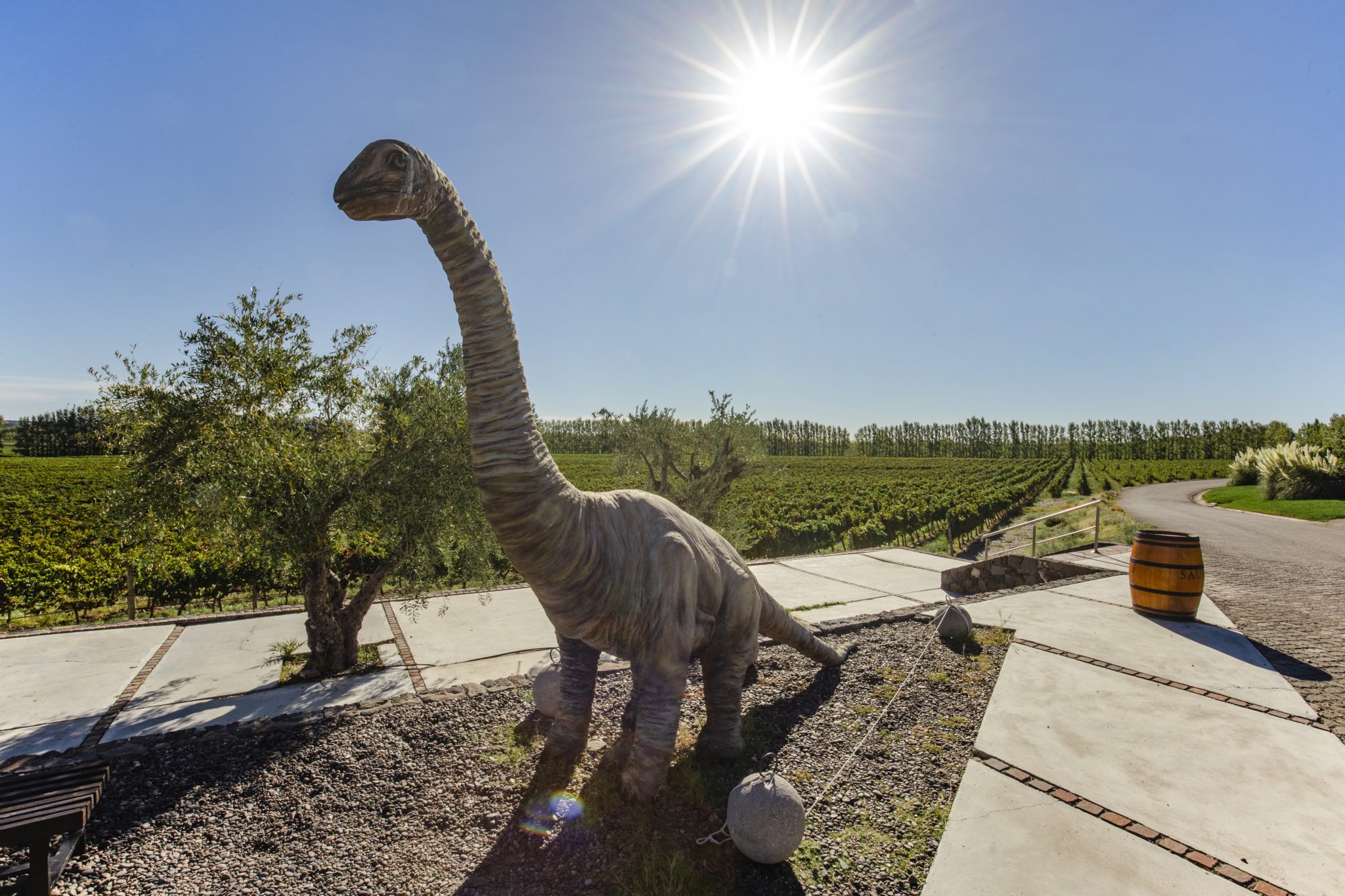
Argentine Patagonia emerges as a unique wine tourism destination in the world, where passion for wine intertwines with prehistoric landscapes and a wild nature that challenges the imagination. In this region where Patagonian winds sculpt the terrain and the Andean mountains keep watch from the horizon, viticulture finds exceptional conditions for producing wines of distinctive character.
The Dino Route: When Wine Meets Prehistory
What makes the wine tourism experience in this region truly unique is its combination with one of the most important palaeontological heritages on the planet. The so-called «Ruta del Dino» or Dinosaur Route connects various points of palaeontological interest in the provinces of Neuquén and Río Negro, transforming the area into a natural open-air museum.
Neuquén harbours one of the richest dinosaur fossil deposits in the world. On these lands, emblematic species such as Argentinosaurus, one of the largest dinosaurs that ever existed on Earth, and the fearsome Giganotosaurus, a carnivore that exceeded the Tyrannosaurus Rex in size, have been discovered.
The epicentre of this route is Villa El Chocón, just over an hour from Neuquén capital, where the Ernesto Bachmann Palaeontological Museum is located. This museum exhibits life-size replicas and original fossils, including remains of the Giganotosaurus carolinii discovered in the area in 1993. But the experience goes beyond the display cases: visitors can walk along paths where dinosaur footprints from 100 million years ago remain fossilised in the rock, petrified testimony to a time when these giants dominated the region.
Other highlights of the route include the Geo-Palaeontological Park Proyecto Dino in Barrealeja, the Carmen Funes Museum in Plaza Huincul (which houses the remains of Argentinosaurus) and various outcrops where palaeontological excavations are still being carried out.
Bodega Familia Schroeder: Pioneers of Patagonian Wine
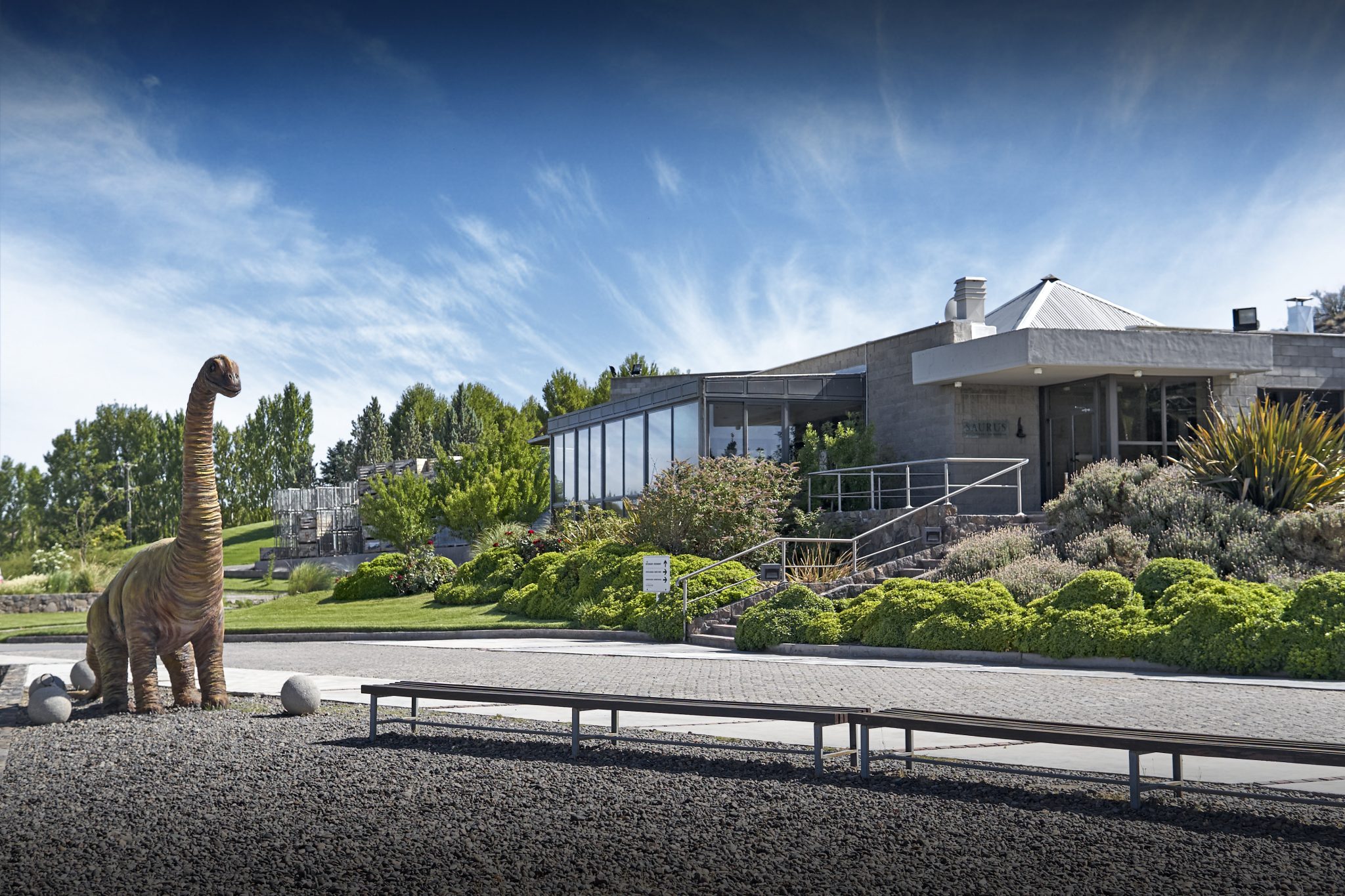
In the heart of the San Patricio del Chañar Valley, in Neuquén province, lies Bodega Familia Schroeder, one of the most emblematic wine-growing establishments in Patagonia. Founded in 2002, this winery represents the vision of a family who believed in the potential of these southern lands to produce high-quality wines.
The winery sits at 350 metres above sea level, benefiting from a cold continental climate with notable thermal amplitudes that can reach 20°C between day and night. This characteristic, together with poor, stony and well-drained soils, forces the vines to develop deep roots in search of nutrients, concentrating flavours and aromas in the grapes in an exceptional manner.
Amongst its outstanding varieties are Pinot Noir, considered one of the finest in Argentina, as well as Malbec, Merlot, Cabernet Sauvignon and Sauvignon Blanc. Familia Schroeder’s philosophy combines traditional techniques with oenological innovation, always respecting the Patagonian terroir that imprints its mineral and fresh character on each bottle.
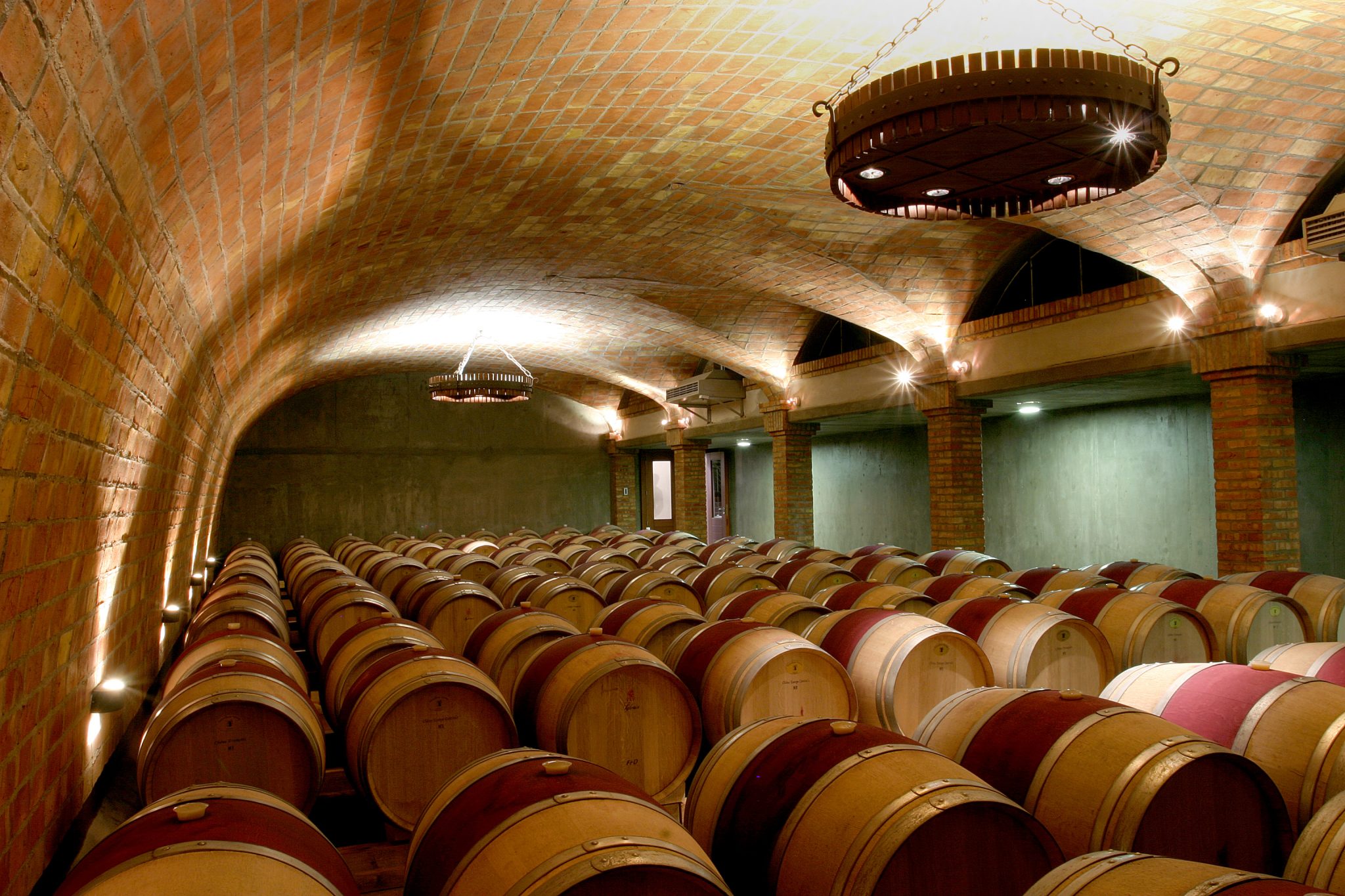
Visitors can tour the vineyards surrounded by mountains, explore the winemaking facilities and taste their wines in an experience that connects directly with the Patagonian landscape. The winery offers guided tours that include walks amongst the rows of vines, explanations about the production process and pairings with regional products such as Patagonian lamb, smoked trout and artisanal cheeses.
An Integrated Experience: Wine, Landscape and Science
The brilliance of this tourism proposition lies in its capacity to integrate seemingly disparate experiences into a coherent and fascinating journey. The same arid landscapes, ancient soils and rock formations that narrate the history of dinosaurs are those that grant Patagonian wines their unique personality.
A typical itinerary might begin with a morning visit to the palaeontological sites, where the sun illuminates the rock formations revealing ochre and reddish tonalities that transport one to another era. After midday, the traveller can head to one of the region’s wineries to taste a fresh and elegant Pinot Noir whilst contemplating the same Andes that the dinosaurs witnessed emerging millions of years ago.
Local gastronomy completes the perfect triangle: slowly cooked Patagonian lamb, trout from crystalline rivers, wild red berries and artisanal chocolates that pair perfectly with the region’s wines, creating a complete sensory experience.
Beyond Wine and Dinosaurs
The region also offers complementary activities for those seeking a more complete experience. The Ezequiel Ramos Mexía reservoir in Villa El Chocón is ideal for water sports and sport fishing, whilst the Limay and Neuquén rivers attract anglers from around the world in search of trout and salmon.
Patagonian estancias open their doors to showcase rural life, sheep farming and wool production, allowing visitors to experience the authenticity of Patagonian gaucho culture. Trekking through canyons and geological formations adds an adventurous dimension to the journey.
The Future of Patagonian Wine Tourism
The Patagonian wine region is in full expansion. Each year new ventures emerge that champion varieties uncommon in other Argentine regions, taking advantage of the extreme climatic conditions that favour fresh, aromatic wines with notable acidity, highly valued in international markets.
Sustainability is a central axis in this development. Patagonian wineries incorporate organic and biodynamic practices, harness the abundant wind energy in the region and work with profound respect for the unique ecosystem that surrounds them.
The combination of wine tourism and palaeontological tourism positions Patagonia as a differentiated destination, capable of attracting wine enthusiasts as well as families with children fascinated by dinosaurs, scientists, adventurers and travellers in search of authentic experiences away from traditional circuits.
Ultimately, visiting the Patagonian wine region and travelling the Dino Route is to embark on a journey through time, where each glass of wine is a toast to the present whilst walking upon the footprints of a remote past, in a territory that still retains the capacity to amaze and move those who venture to discover it.

Sobrelías Redacción
Sobrelías Redacción