 Sobrelias Revista Digital del vino y el enoturismo


The project “Mze da Ghvino” (მზე და ღვინო, Sun and Wine) is a small Georgian producer of natural wines that clearly reflects the new wave of artisanal wineries in the country: small-scale projects closely linked to their territory and dedicated to the revival of traditional winemaking methods.
The Mze da Ghvino wine project
The winery is located in Bakurtsikhe, in the municipality of Gurjaani, within the Kakheti region, the most important territory for Georgian wine.
It lies on the north-eastern slopes of the Gombori mountain range, on the right bank of the Alazani River, one of the historic viticultural axes of the country.
At an altitude of between 350 and 750 metres above sea level, the winery’s vineyard plots are distributed across the surrounding landscape.
This environment forms part of the Alazani Valley, which for Georgia is what Burgundy or Bordeaux are for France: the historic heart of its viticulture.
The dominant soils are humus-carbonated, well suited to producing wines with structure and good acidity.
The philosophy of the project
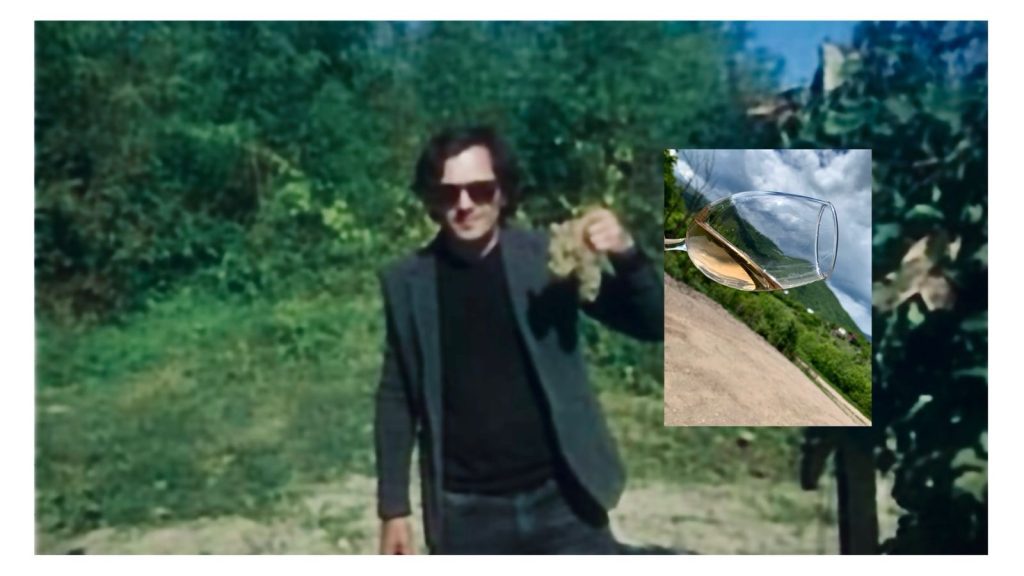
“Mze da Ghvino” is part of the Georgian natural wine movement. It is therefore no surprise that its philosophy centres on minimal intervention in the cellar, winemaking with spontaneous fermentation, maximum respect for traditional methods, and a clear focus on working with indigenous grape varieties.
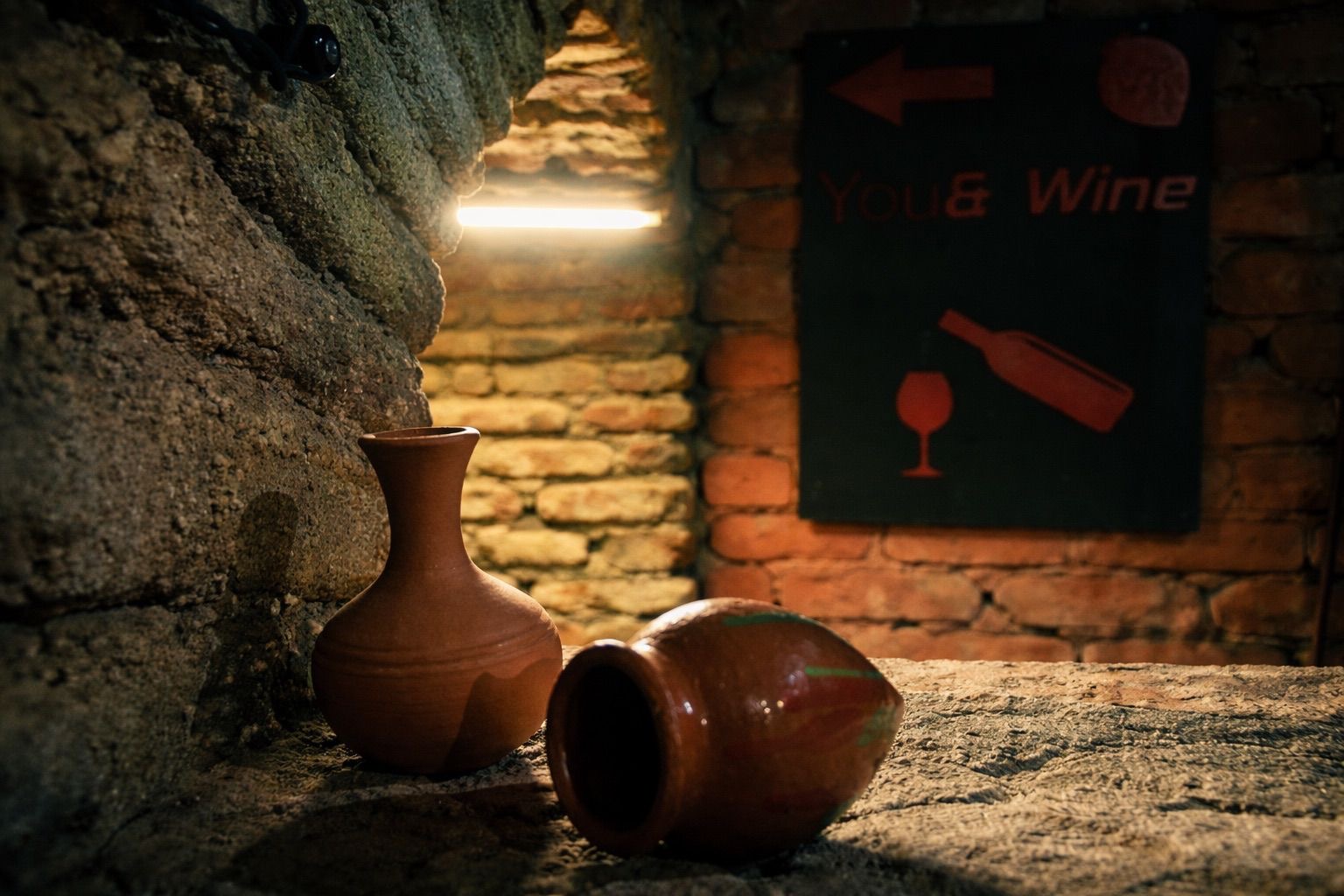
During our visit, it was striking to see that the winery does not use stainless-steel tanks or modern barrels. Production is carried out exclusively using the traditional Kakhetian method, namely qvevri — large clay amphorae buried underground, so characteristic of Georgia and its millennia-old winemaking tradition.
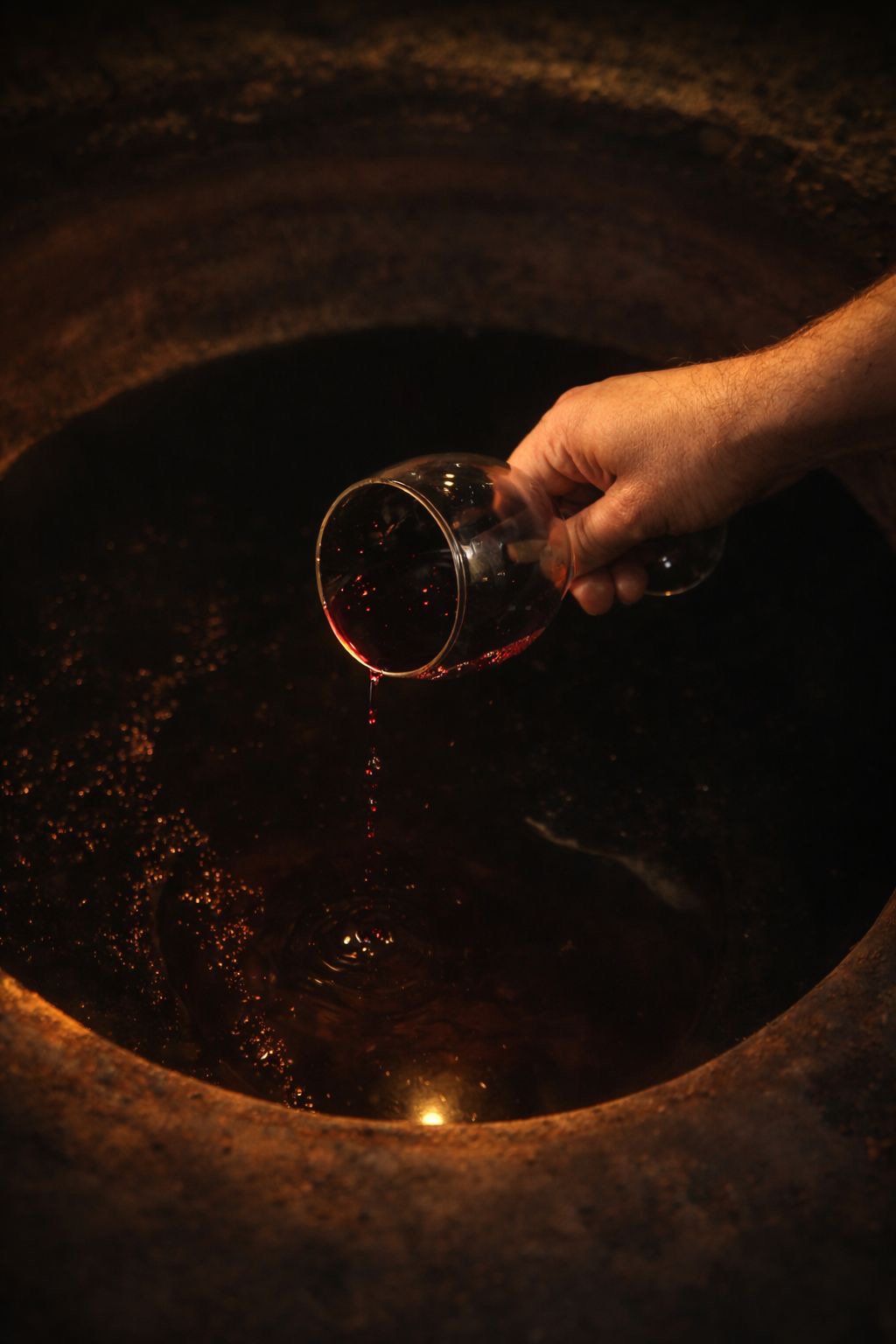
In this style of vinification, the must ferments together with skins and seeds, followed by long macerations and finally ageing in the qvevri.
In this project, after manual harvesting and pressing of the grapes, the must together with skins and seeds is placed into the qvevri. Natural alcoholic fermentation takes place there, and the wine remains resting with its solids for at least six months.
As we observed, this traditional method produces wines with greater structure, a remarkable tannic texture (even in the white wines), and more complex aromas.
This is why many Georgian white wines are classified as “orange wines.”
Wines of Mze da Ghvino: the authenticity of Georgian terroir
The project focuses on indigenous Georgian grape varieties, something very characteristic of the country, which possesses more than 500 varieties.
Among the red wines we find Saperavi, the traditional Georgian grape of the teinturier type, producing deeply coloured wines with clear tasting notes of blackberries, black plums and well-integrated spicy nuances. There is also Tavkveri, which produces a highly aromatic and very fresh red wine.
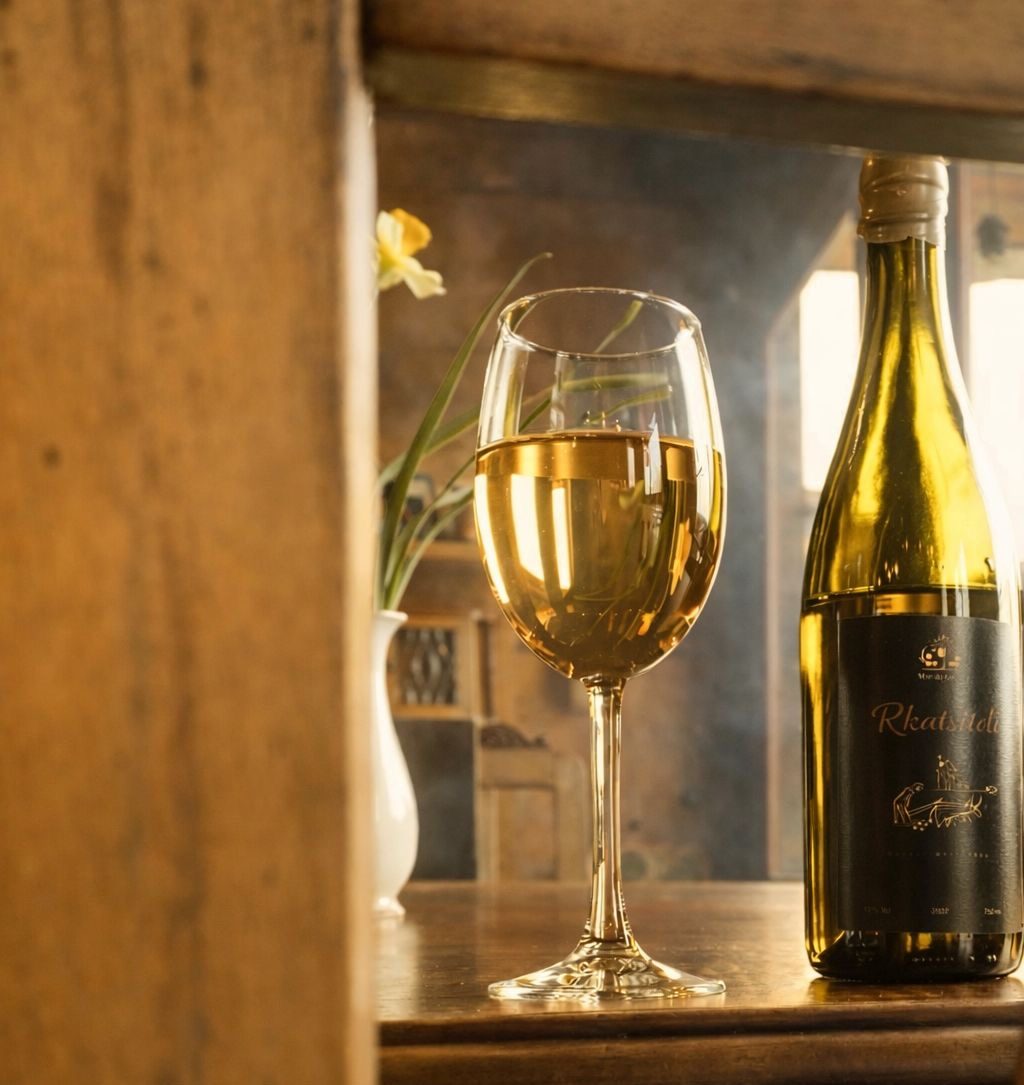
Among the white varieties, Rkatsiteli stands out. It is made from one of the oldest white grape varieties in the world, and when macerated in qvevri it becomes an amber wine, known in the international market today as a modern-style orange wine. There is also Chinuri, a white variety often used for natural sparkling wines.
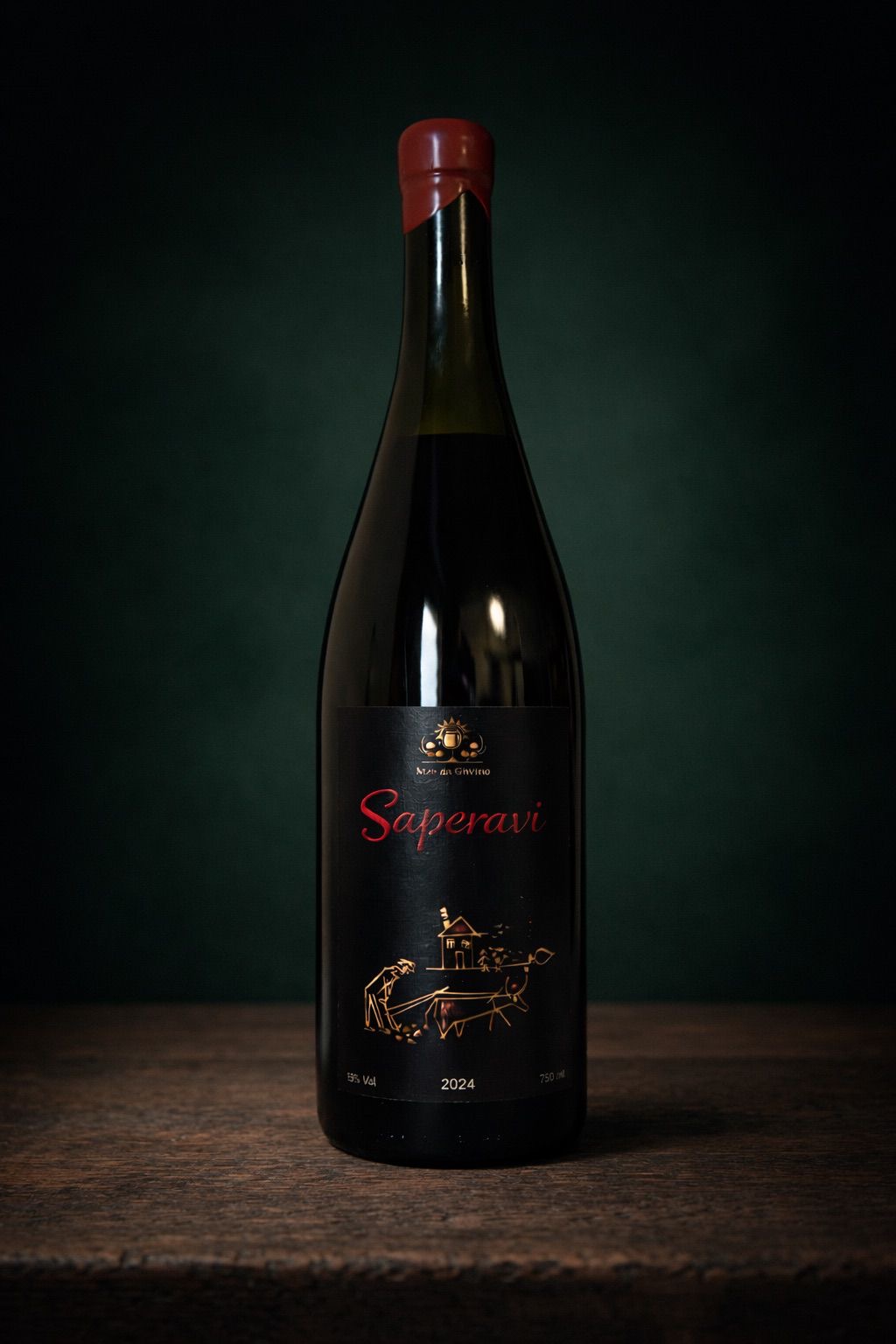
Among the wines of the project that we were able to taste, we encountered the Saperavi Qvevri Dry Red, a wine with great structure and designed for long ageing potential. On the nose it shows intense aromas of black fruit, vegetal hints reminiscent of damp earth, and perfectly integrated spicy notes such as cocoa or black pepper. Powerful and structured on the palate, with firm tannins and a long mineral finish.
It is probably the most serious and gastronomic wine of the project.
The Rkatsiteli Qvevri Amber Wine (orange wine), made from 100% Rkatsiteli, undergoes fermentation in qvevri with skins for several months and a long maceration typical of the Kakhetian method. In the glass it displays an intense amber or copper colour. Aromas include dried apricot, orange peel, honeyed notes, walnut and black tea. On the palate it shows an unusual tannic texture for a white wine, medium-to-full structure and a dry finish with spicy notes.
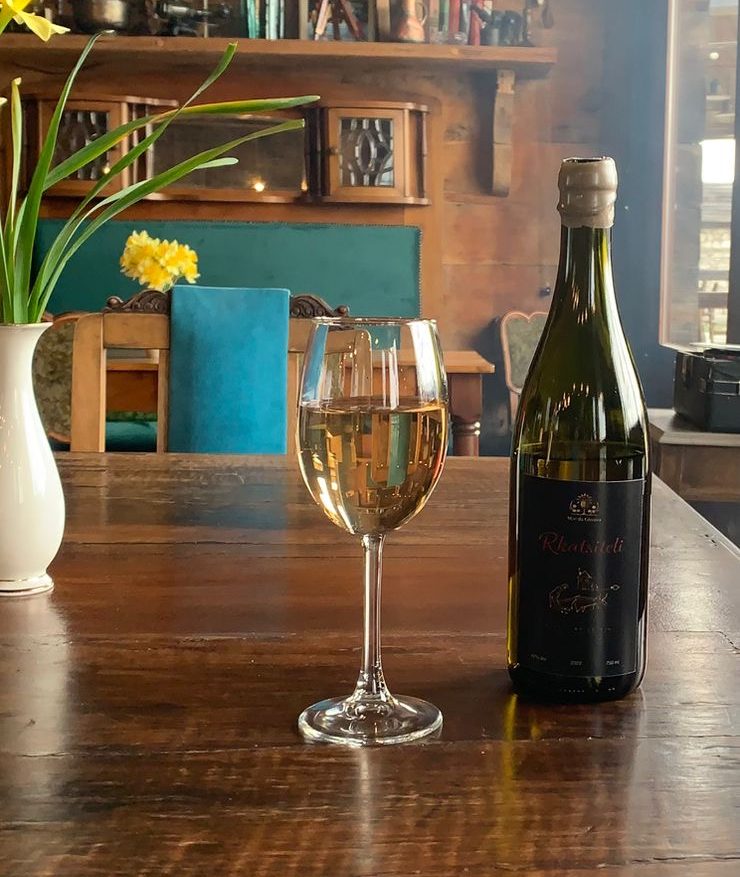
This wine reflects the ancestral style of Georgia very well.
The Rkatsiteli Qvevri White is a traditional dry white wine made from 100% Rkatsiteli, vinified in qvevri but with shorter skin contact than the amber wine. In the glass it presents an intense golden colour. Aromas of yellow apple, quince, dried flowers and light honey appear on the nose. On the palate it shows marked acidity, broad texture and a mineral finish.
It is the freshest and most approachable of the wines produced in qvevri.
There are also the wines Pet-Nat Chinuri and Pet-Nat Tavkveri, which illustrate an interesting combination of tradition (qvevri) and modern natural wine trends such as pét-nat.
The Pet-Nat Chinuri is a natural pétillant-naturel sparkling wine, made from 100% Chinuri (a white grape from eastern Georgia). It is produced using the ancestral method, with fermentation finishing in the bottle, without disgorgement or dosage. In the glass it appears pale yellow and slightly cloudy, with aromas of green apple, pear, fresh yeast and bread. On the palate it shows a fine and creamy bubble, very refreshing, with a slightly saline finish.
This wine represents the most modern and experimental side of the project.
The Tavkveri Pet-Nat is a natural sparkling wine, either rosé or a very light red, made from Tavkveri, an aromatic red grape. Produced using the ancestral pét-nat method with natural fermentation in bottle, it displays a bright ruby-pink colour in the glass. Aromas of raspberry, pomegranate, wild strawberry and fresh herbs appear on the nose. The palate is very juicy, with lively bubbles and refreshing acidity.
It is probably the most playful and easy-drinking wine in the range.
Georgia and its cultural dimension
Projects such as Mze da Ghvino are part of a broader movement in Georgia aimed at reviving the qvevri method, alongside the strong rise of natural wines and the revaluation of ancestral grape varieties.
Georgia is widely considered the cradle of wine, with evidence of winemaking dating back more than 8,000 years, which gives wineries like this an immense cultural significance.

Sobrelías Redacción
Sobrelías Redacción