 Sobrelias Revista Digital del vino y el enoturismo


Harvest Seasons & New Generations:
Two Visions for the Future of Wine Tourism
Chile · Wine Tourism
The Harvest Season as a State Tourism Strategy
What was for decades a local celebration around the grape harvest has been transformed into one of Chile’s most robust tourism products — spanning four months, forty events, and over 1.4 million visitors.
A Calendar That Is No Longer a Schedule — It Is an Industry
The 2026 season opens on 13 February in Palmilla and stretches all the way to 29 May with the University Harvest Festival hosted by the Universidad de Talca, featuring more than forty events distributed across the length of the country — from the Arica and Parinacota region in the far north to La Araucanía in the south. The breadth of the offering is striking: the programme encompasses century-old celebrations, boldly innovative proposals, and everything in between.
Among the most eye-catching events of this edition is a celebration set in the heart of the Pampa del Tamarugal, in the middle of the Tarapacá desert; an urban harvest festival installed in Santiago’s Barrio Italia neighbourhood, aimed at bringing the countryside experience into the capital city; the Fiesta del Vino de Pirque, marking its centenary and drawing together more than thirty wineries; and the legendary Tren del Recuerdo — a heritage train that winds through the Aconcagua Valley with stops at estates such as El Escorial, Sánchez de Loria, and Peumayen.
The Figures Making Waves on Social Media
The statistics released at the official launch have attracted considerable attention across digital media. In 2025, the harvest festivals drew a combined audience of over 1.4 million visitors. The profile of attendees is particularly revealing: predominantly female (61%), strongly rooted in their local area — nearly 78% come from the same region where the event is held — and displaying a remarkably high rate of loyalty, with 62% attending at least one further festival during the same season. According to the 2024 National Agri-tourism Register, there are currently 219 wineries open to visitors across the country, a figure that represents a 133% increase over the past decade.
The Digital Tool That Changed the Conversation
One of the most widely shared recent developments has been technological in nature. Enoturismo Chile — a programme run by Corfo, the Chilean Economic Development Agency — launched a new interactive map on its website that consolidates all information relating to each festival: full programming, activities, ticket purchasing, and travel directions from any point in the country. This transforms the harvest season into something as straightforward to plan as booking a flight or a hotel room, addressing a long-standing gap in the sector.
The Challenge That Remains: The International Visitor
Despite its domestic success, analysts point to a significant gap still to be bridged. The pisco harvest festivals of Atacama and Coquimbo, in particular, need to break through to the international tourist market in order to fully realise their growth potential. Recognition in prestigious global rankings — including Great Wine Capitals, Forbes, and 50 Best Vineyards — opens that door, but converting worldwide visibility into actual foreign visitors remains the central challenge facing Chilean wine tourism in the years ahead.
Italy · Wine Tourism
Italy and Generation Z: Vigneti Aperti, or How to Redesign the Vineyard for a Generation That Refuses to Be a Passive Audience
Eight months, the whole of Italy, one new premise: for the first time, an industry built around mature, affluent consumers is explicitly redesigning its experience for Generation Z.
Eight Months, the Whole of Italy, One New Premise
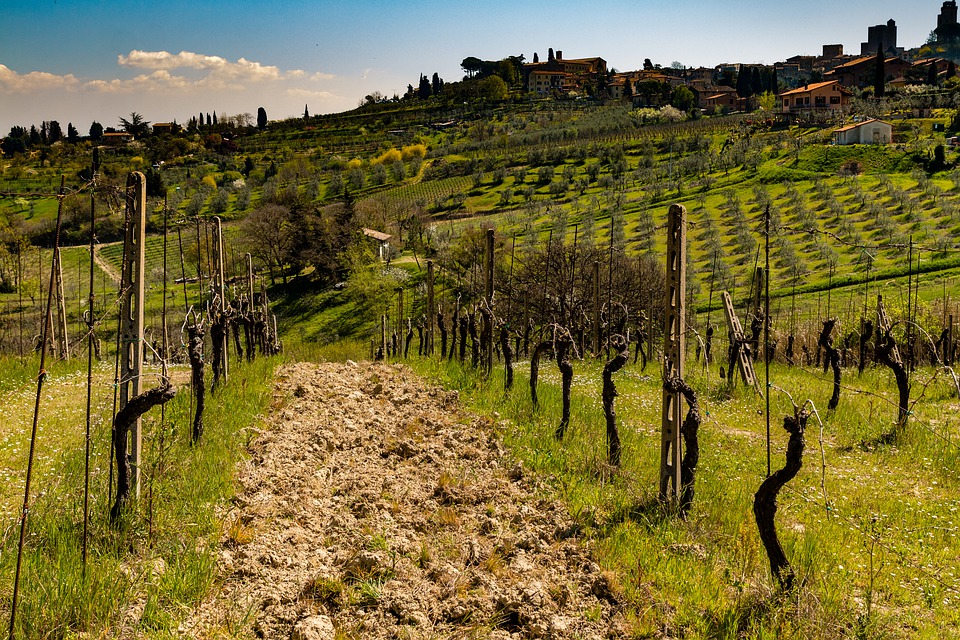
The Movimento Turismo del Vino (MTV) has just unveiled the 2026 edition of its flagship programme, and what is new here is not the format — which has existed for several years — but the diagnosis driving it. Vigneti Aperti transforms wineries across Italy into spaces of discovery and regeneration from March through to October, following the complete biological cycle of the vine: pruning, flowering, veraison, and harvest. Yet this edition carries a declared ambition: to connect with Generation Z — a cohort that does not wish merely to attend, but to participate; that does not want only to taste, but to understand, to handle, and to contribute.
The distinction may appear subtle, but it demands a profound rethink of the entire visitor experience. A sommelier delivering a masterclass to a passive audience is precisely what this new public rejects. What it seeks is real work, an honest conversation with the producer, and wine as a gateway to something broader: the territory, the natural cycle, sustainability. In short: authenticity over spectacle.
The Experience Model
The planned activities range from guided walking and cycling routes through the vineyards to art workshops, family treasure hunts, and a wide variety of open-air experiences blending leisure, wellbeing, and environmental awareness. The approach taken by producers centres on transparency and the promotion of conscious consumption, stripping away all rhetorical artifice. The encounter with the winemaker becomes a genuine exchange in which the preservation of the surrounding landscape is the shared core value. In marketing terms, the industry calls this authentic storytelling: genuine narrative, not aspirational or constructed.
What the Research Says: Italy’s First Major Regional Study of Wine Tourism
One of the most widely discussed aspects of this launch is academic in origin. CESEO — the Centre for Wine and Olive Oil Tourism Studies at LUMSA University — has published the first comprehensive study examining regional differences within Italian wine tourism. Its findings reveal a highly varied sector: in the south, entertainment and the showcasing of local produce dominate the visitor experience; in central Italy, the landscape takes absolute centre stage; whilst in the north, the emphasis falls on greater flexibility in visiting hours and a more accommodating welcome for guests. Far from being a weakness, this fragmentation functions as a competitive advantage: each territory genuinely offers something distinct.
Why This Is Trending Online
The reason Vigneti Aperti has generated such extensive commentary across wine tourism forums and social media is not simply the scale of the programme — which encompasses close to a thousand wineries across Italy — but the paradigm shift it represents. Explicitly naming Generation Z as the target audience for wine is a bold move in a sector that has historically looked to a mature, affluent clientele. The implied message is powerful: the future of Italian wine does not lie in persuading millennials to drink more, but in redesigning the entire experience for a generation that consumes in a radically different way — one that places authenticity above luxury, and learning above status.

Sobrelías Redacción
Sobrelías Redacción