 Sobrelias Revista Digital del vino y el enoturismo

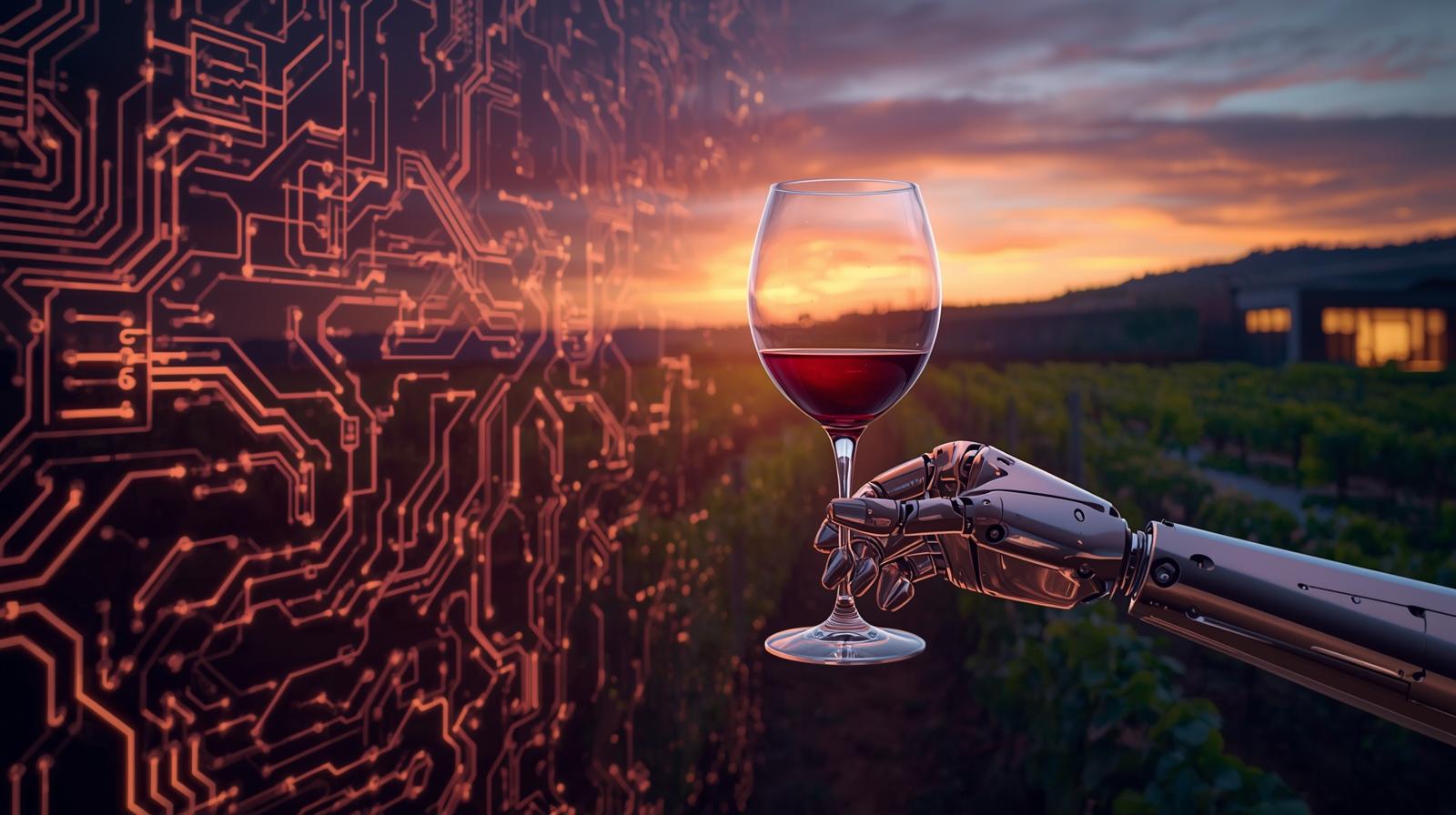
From autonomous tractors to harvest predictions based on satellite imagery, technology is changing the way wine is produced in Spain without replacing the viticulturist
There is something apparently contradictory about the image of a robot moving between the rows of a centuries-old vineyard. Viticulture is, by its very nature, a trade built on patience, on knowledge passed down through generations, on decisions taken by reading the sky and feeling the earth. And yet artificial intelligence has been steadily gaining ground in that seemingly impenetrable territory for years, and the Spanish wineries already deploying it have no intention of turning back.
Researchers from the CSIC and the Universidad Politécnica de Madrid have converted an urban electric vehicle into an autonomous platform capable of travelling vineyard rows without a driver, gathering data in real time, detecting potential disease outbreaks and estimating future production with a degree of precision that would have seemed far-fetched not long ago. The experiment, carried out in vineyards in Arganda del Rey and at the facilities of the Galician winery Terras Gauda, demonstrates that robotics applied to viticulture is no longer a laboratory project but a tool that can be deployed in the field with tangible results.
In the Ribera del Duero, three leading wineries — Martín Berdugo, Prado Rey and Vizcarra — took part in a pilot project using images captured by drones and satellites, processed through artificial intelligence algorithms, to help winemakers determine the optimal moment for harvest, identify the nutritional requirements of the vines and pinpoint which plots hold the greatest potential for producing different styles of wine. The technology does not replace the professional’s judgement, but it provides a quantity and quality of information that no human being could assemble and process unaided.
Companies such as González Byass already apply artificial intelligence to monitor the continuous development of grape clusters and the emergence of pests or diseases throughout the entire growing season, optimising the use of fertilisers, pesticides, energy and water. Bodegas Cepa 21, meanwhile, is collaborating with IBM to develop a system that combines historical data from the Ribera del Duero Regulatory Council with advanced meteorological information.
The vitivinicultural cluster INNOVI notes that artificial intelligence has now reached a sufficient level of maturity to deliver reliable results in the sector. The digitalisation of the entire production chain, more sustainable vineyard management and the development of new products tailored to the evolving tastes of the consumer are the three broad areas in which technology is playing an increasingly decisive role.
The debate over whether technology dehumanises one of the world’s most artisanal crafts is far from settled. But those working at the intersection of viticulture and artificial intelligence insist that the aim is not to replace the viticulturist, but to equip them with better tools for making decisions in an ever more demanding context: irregular harvests driven by climate change, more competitive markets, better-informed consumers and regulatory pressure pushing the entire sector towards sustainability. In that landscape, the algorithm may have no sense of smell — but it can count grape clusters rather better than anyone.

Sobrelías Redacción
Sobrelías Redacción