

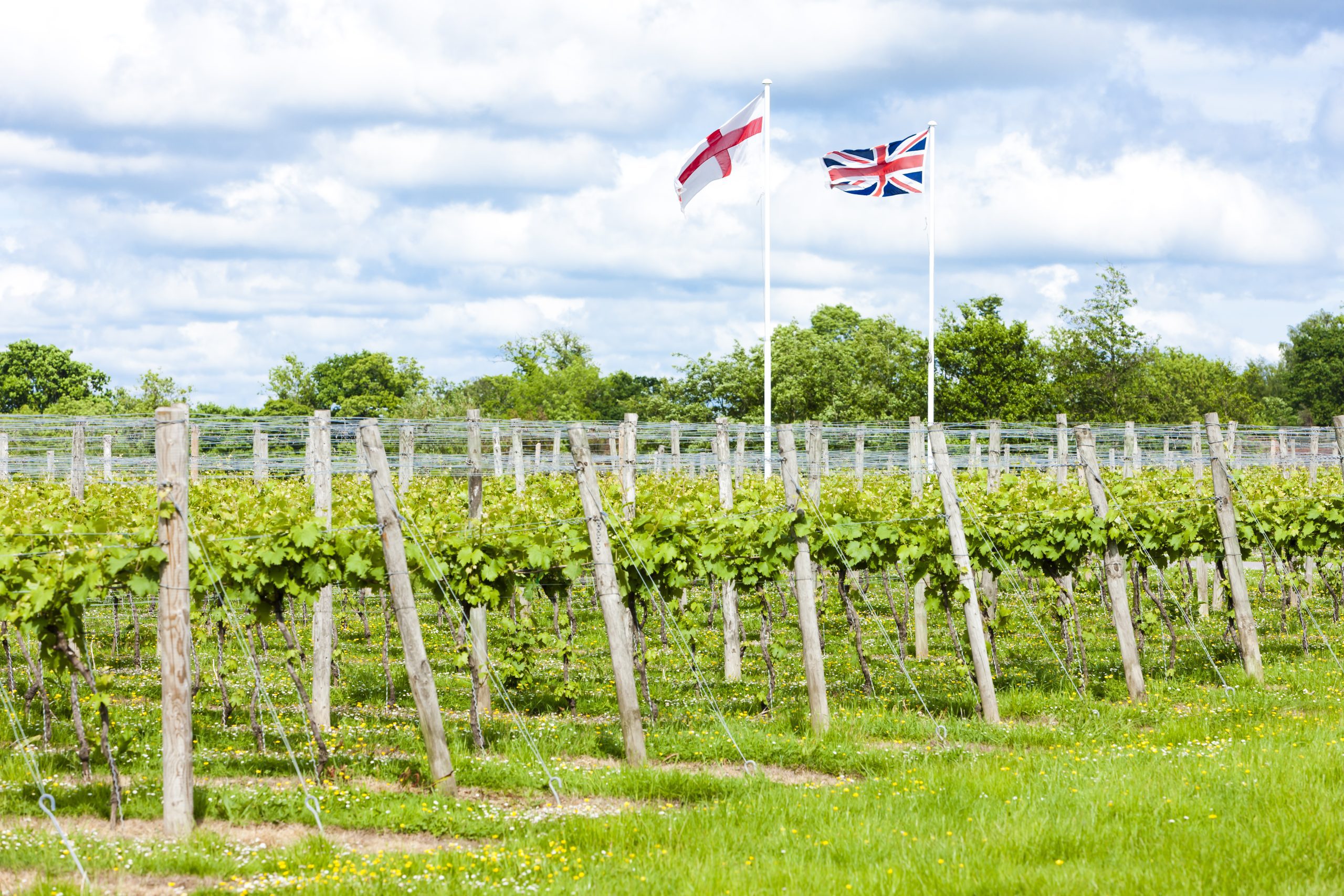


From Vine to Visitor: New Wine Destinations Emerge Across Northern Europe
When someone mentions quality wine, the mind instinctively travels to Bordeaux, Tuscany or La Rioja. But that conditioned reflex has been growing steadily out of date. Across northern Europe, vineyards are taking root at latitudes that would have seemed entirely implausible for viticulture just a few decades ago — from Estonia to Scandinavia — driven by two mutually reinforcing forces: the emergence of cold-resistant hybrid varieties and the effect of climate change on average seasonal temperatures.
The most striking case, in terms of both scale and speed of growth, is that of the United Kingdom. Wine tourism in the country has recorded a 55% increase in visitor numbers since 2022, reaching 1.5 million visits in the most recently measured year. A figure that speaks of a firmly established phenomenon, not a passing trend. Wine tourism now accounts for 25% of total income for British vineyards, and six in ten producers anticipate that visitor numbers will grow by more than 20% over the next five years.
The quality argument no longer admits much debate. The 2025 harvest was described as “outstanding” following the driest summer on record, raising very high expectations particularly for still wines made from Chardonnay and Pinot Noir. According to harvest report author Stephen Skelton MW, it may well prove to be the finest year ever achieved for still wine in the country.
The geographical engine of this transformation is concentrated in the south-east of England. Counties such as Kent, Sussex and Cornwall are gaining international recognition thanks to an offer that combines premium wine, gastronomy and rural landscape, attracting both domestic visitors and travellers from across Europe and the United States. English sparkling wines, in particular those from West Sussex and Kent, have accumulated international awards and have begun to attract the attention of Champagne producers themselves, who are watching the sector’s development with considerable interest.
Demand is also shifting in character. Private and personalised visits are set to account for around 58% of the British wine tourism market in 2025, reflecting a broader trend in experiential travel whereby visitors increasingly favour bespoke itineraries over standard packages. Today’s typical visitor is no longer merely seeking a wine tasting, but wishes to understand the terroir, meet the producer, and take home something genuinely one of a kind.
The financial outlook for the sector is equally ambitious. Market projections place the value of the British wine tourism market at $15.5 billion in 2025, with a trajectory that could see that figure triple to $43.5 billion by 2035, underpinned by the expansion of vineyard accommodation, themed routes and eco-friendly experiences.
Further north, the phenomenon continues to advance, albeit on a smaller scale. In Sweden, a regulatory change passed in mid-2025 legalised direct sales from the winery to the consumer — something previously prohibited for beverages above 3.5% alcohol. The measure removes dependence on the state monopoly Systembolaget and opens a direct revenue stream for small producers. In Estonia, the winery Luscher & Matiesen offers rural stays, workshops and food pairings at one of the most northerly open-air vineyards in the world, where the wine bears the unmistakable imprint of short summers and Nordic conditions that make it genuinely singular.
The European wine map is being redrawn from north to south, and the territories that once looked enviously towards the great classics of the south are beginning to receive that gaze in return.

Sobrelías Redacción
Sobrelías Redacción