


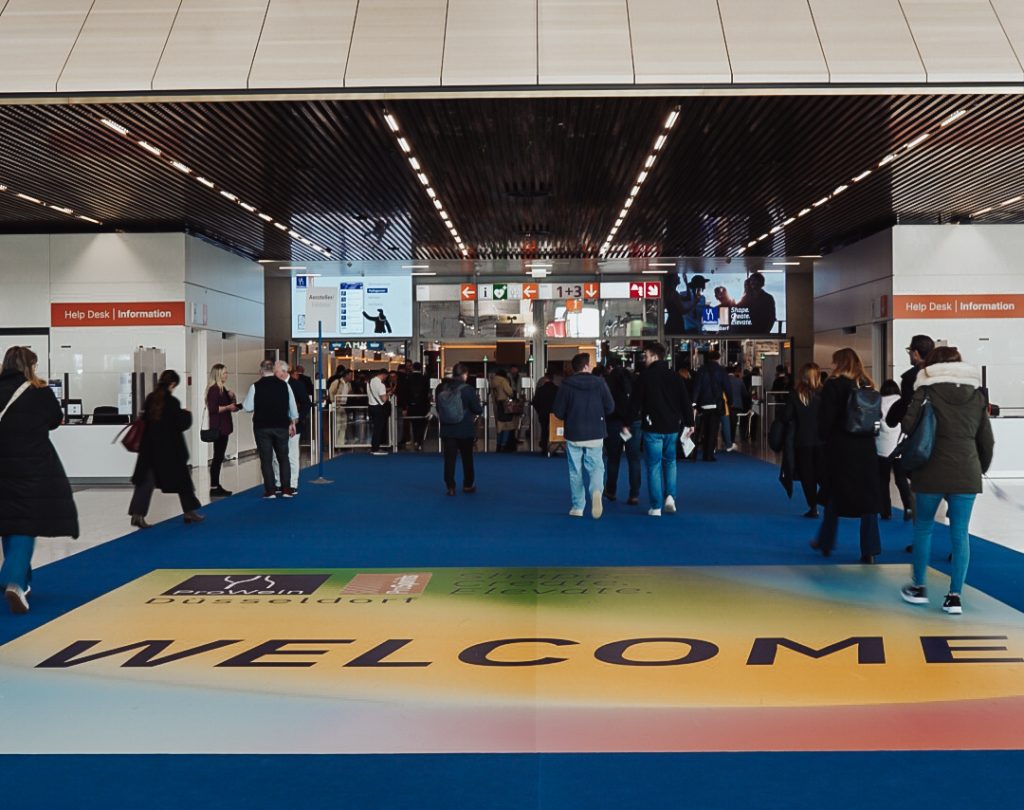
Visit to ProWein 2026: Düsseldorf Returns as the World Capital of Wine
From March 15 to 17, the German city hosts a renewed and ambitious edition of the most important international wine trade fair
There are trade fairs, and then there is ProWein. Every March, Düsseldorf transforms into the absolute epicenter of global wine and spirits commerce, and this 32nd edition is no exception. Under the motto “Shape. Create. Elevate.” — a call to mold, create, and raise the future of the industry — the fair has arrived with more energy than ever, a renewed structure, and a clear commitment to adapting to the times.
This makes it a visit we are always glad to make.
Figures that speak for themselves
ProWein 2026 has brought together around 4,000 exhibitors from more than 60 countries and professionals from over 140 different markets. To get a sense of the weight of this event, it is worth recalling that the previous edition, in 2025, already gathered nearly 4,200 exhibitors from 65 countries and welcomed more than 42,000 visitors.
One of the most celebrated new features of this edition has been the reorganization of the halls. Exhibitors are spread across halls 1 through 7, with equal floor space, clearer country-based layouts, and notably greater visibility for exhibitors. For visitors, this translates into distances that are 30% shorter, better navigation, and more time for meetings, tastings, and decisions. In short: fewer kilometers walked, more deals closed.
The spaces generating the most buzz
Beyond the country pavilions — always busy and lively — ProWein 2026 has invested in thematic spaces that set trends. France has set up with all its key regions in hall 4, with the Union des Grands Crus de Bordeaux presenting its new vintage. Portugal occupies hall 7a with a unified and powerful concept, while the spirits segment, ProSpirits, has for the first time taken up two full halls with 500 exhibitors from more than 50 countries.
The German association VDP (Verband Deutscher Prädikatsweingüter) is represented at this edition with 84 wineries, ten more than in 2025, reversing for the first time the declining trend it had carried since 2014 — a development widely read as a signal of renewed confidence in the fair.
The ProWein Agora serves as the central stage for conferences and debates. The ProWein Business Report 2026, produced by Geisenheim University in collaboration with more than 1,000 professionals from 30 countries, portrays an industry marked by caution but with clear pockets of optimism: still white wines are the standout favorites, with 69% of producers counting on them as a sales driver.
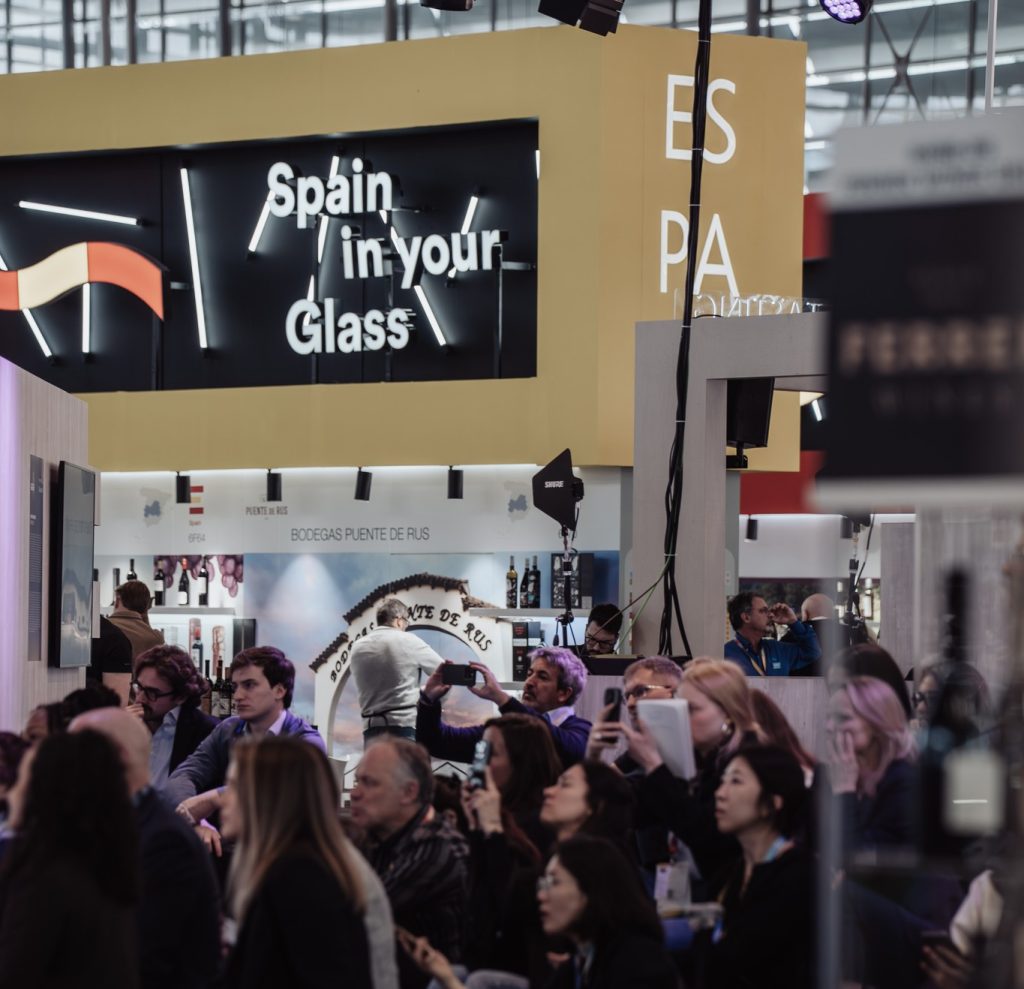
Spain in Hall 6: a very large family
If there is one thing that is never missing at ProWein, it is the Spanish presence. Spain has once again presented itself collectively in hall 6, with all its major regions: Rioja, Ribera del Duero, Rueda, Valencia, and, for the first time, Toro. A parade of appellations that confirms the export strength of Spanish wine and its appetite for conquering international markets.
The ICEX Spain Pavilion serves as a key meeting point for international professionals and media in search of news and prestigious Spanish references, hosting promotional activities, tastings, and seminars. Around it, an ecosystem of regional stands turns hall 6 into one of the most visited in the entire fair.
D.O. Rueda, with more than two decades of continuous presence at the fair, has this year featured its own stand and nearly 60 wineries from the appellation, with the goal of helping international professionals understand the complexity of its soils and the potential of Gran Vino de Rueda as a world-class benchmark for white wines.
D.O. Ribera del Duero has showcased its innovative Wine Boulevard: a free-tasting tunnel featuring more than 170 wines from over 80 wineries, available for open tasting by trade visitors. A format that has drawn long queues of visitors eager to discover the diversity of the appellation.
The Comunitat Valenciana is represented by 44 wineries — 32 within the grouped space of the regional government and 12 independently — with a 336-square-meter stand that for the first time has included a dedicated tasting area with its own programming.
Three wineries that have stood out
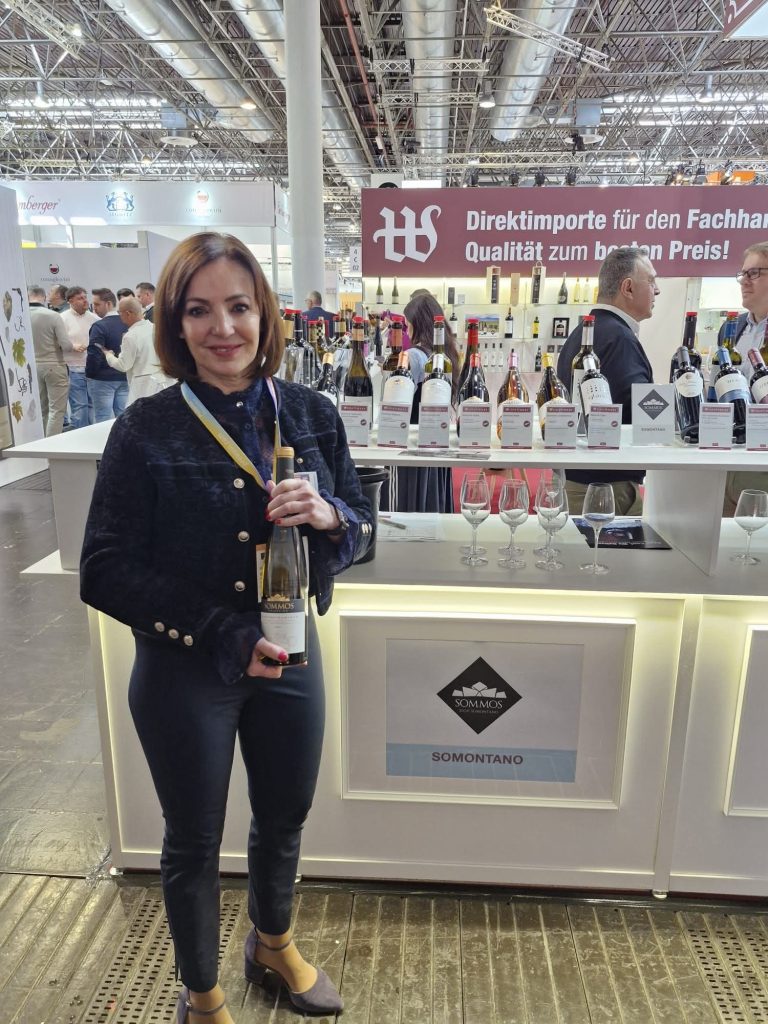
Among such an extensive Spanish offering, some names have shone particularly bright. Bodega Sommos, a flagship of D.O. Somontano, returned to ProWein with its trademark commitment to quality and innovation. Located in hall 11, stand H30, with the support of ICEX and Aragón Exterior, this Aragonese winery needs no introduction: situated in the heart of Somontano, it features spectacular architecture integrated into the landscape, with facilities buried up to 27 meters underground to preserve natural production conditions, and 355 hectares of vineyards planted with varieties authorized by the D.O. Its Colección range, with varietals ranging from Gewürztraminer to Pinot Noir, has generated great interest among international buyers at the fair.
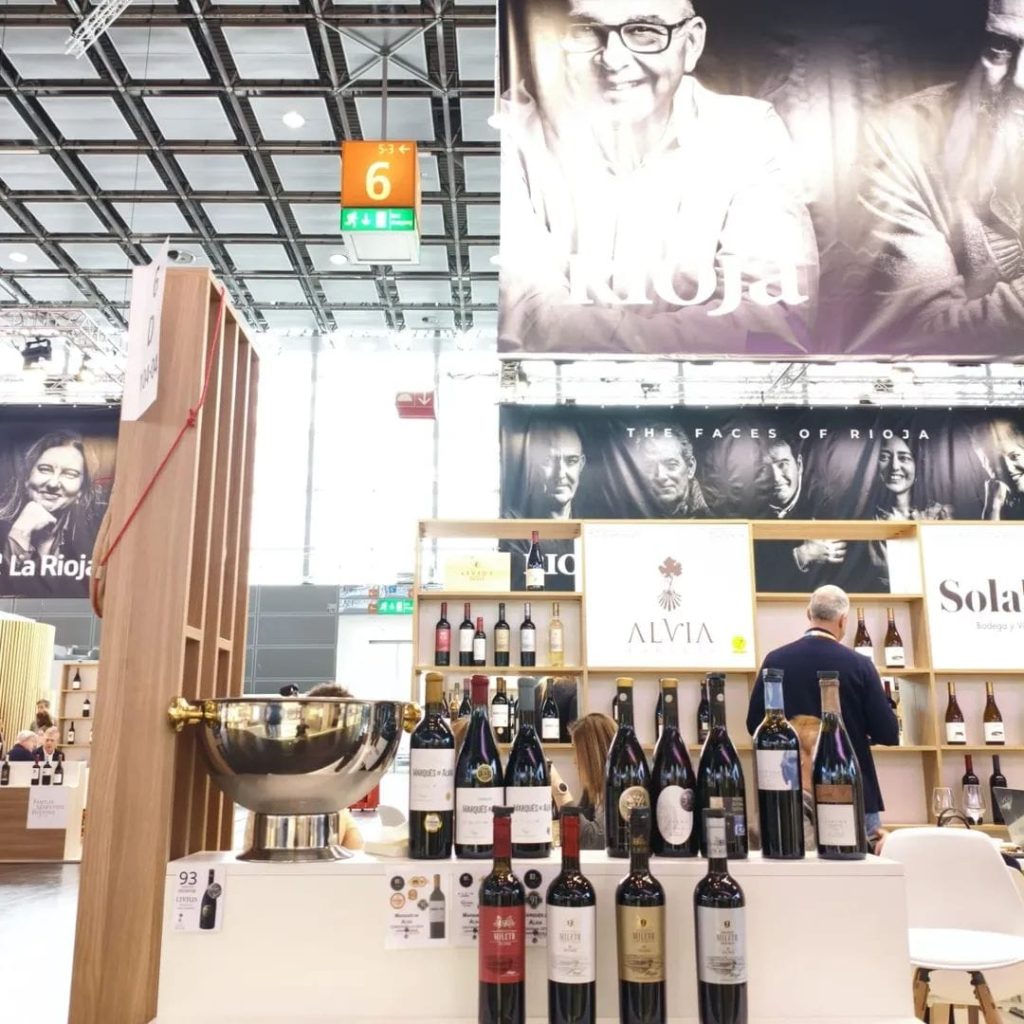
Bodegas Alvia, with its wines from Rioja, has formed part of the extensive Riojan representation in Düsseldorf. A name that gains more followers outside Spain’s borders every year, and one that has found in ProWein the perfect stage to continue building long-term commercial relationships.
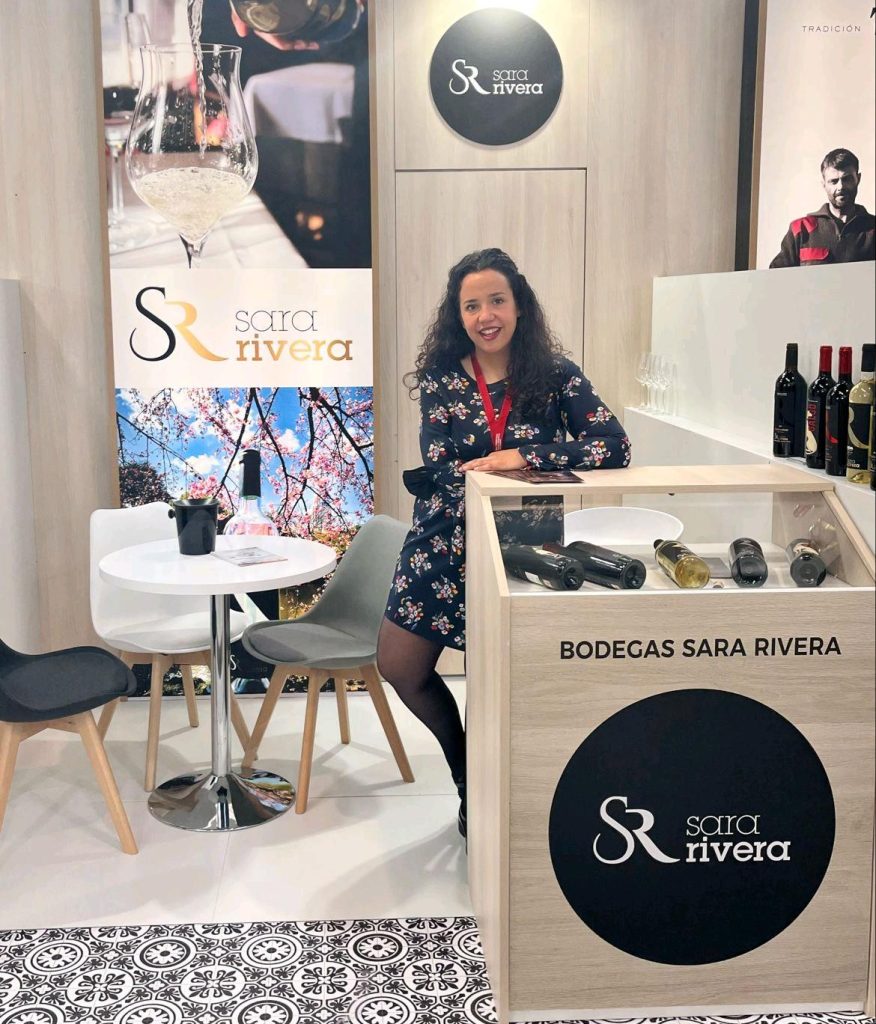
Bodegas Sara Rivera, meanwhile, has demonstrated that the most personal and carefully crafted projects also have their place in the world’s greatest wine showcase. With wines made from old vines aged between 50 and 90 years in Pesquera de Duero, and a manual harvest with selection of the finest clusters, Sara Rivera crafts wines with great aging potential — powerful and intense — that immediately connect with the most discerning palates in the international market. Their presence at ProWein is confirmation that a commitment to quality without artifice carries ever greater value in the global market.
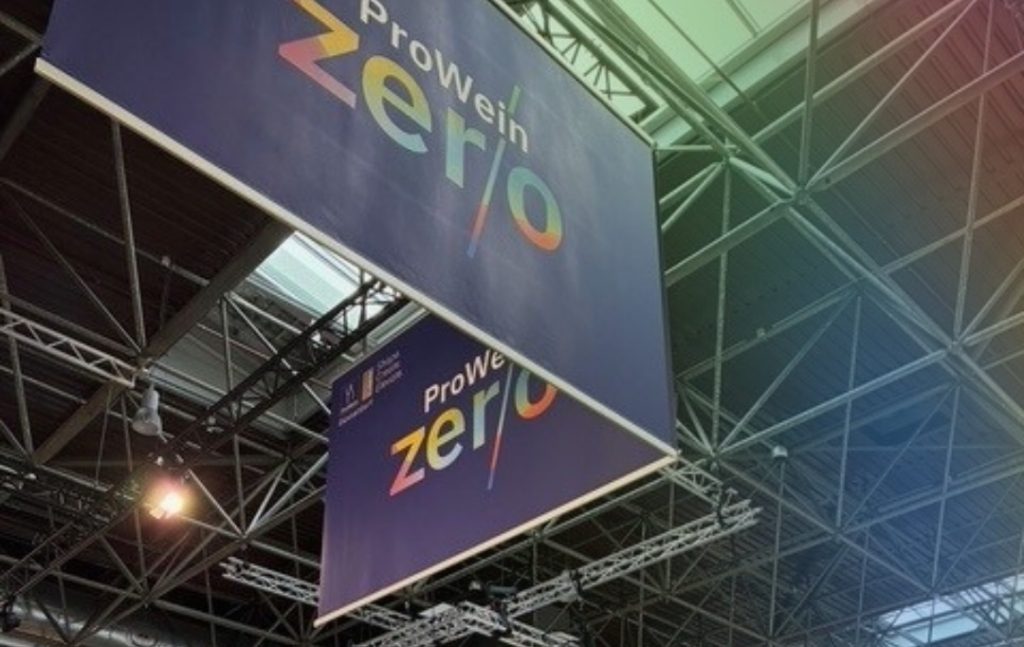
ProWein Zero: when zero becomes the protagonist
If there is one trend that has shaken the fair’s corridors, it is non-alcoholic wines. And ProWein has not looked away: it has built an entire universe around them.
ProWein Zero, located in hall 5, has been completely redesigned and for the first time incorporates alcohol-free spirits. It features a Zero Tasting Bar, curated by publisher Meininger, where professionals can discover more than 60 international brands in an interactive setting. As Frank Schindler, Director of ProWein Düsseldorf, notes: “No/Low is not a passing trend, but a growing market segment.”
And the data backs him up: nearly 180 exhibitors include No/Low references in their catalogs during the fair, while the ProWein Zero area has brought together more than 30 specialist companies. Featured brands include Geiger, Kolonne Null, Flavologic, Henkell, Pierre Chavin, Neobulles, and LEA Winery, alongside international suppliers such as Schloss Wachenheim, Les Grands Chais de France, and Reh Kendermann.
With ProWein Zero, alcohol-free and low-alcohol products receive a high-profile platform where wines, spirits, and new beverage concepts are debated and tasted — not as a fringe phenomenon, but as a growing market segment. And you can feel it in the corridors: the interest from importers and distributors in these products continues to grow.

Sobrelías Redacción
Sobrelías Redacción