


The Great Wine Routes of the World (I): “Burgundy, the Route of the Grands Crus”
A Definitive Guide for the Wine Tourist
The Vineyard That Invented the Concept of Terroir
To speak of Burgundy is to speak of the place where wine became philosophy. There is nowhere else in the world where a difference of barely one hundred metres between two plots justifies a tenfold difference in price between two bottles. That obsession with terroir — the idea that the soil, aspect, and microclimate of each individual plot are inseparable from the wine itself — was born here, shaped by centuries of Cistercian monastic work.
Burgundy boasts the greatest number of appellations of any French wine region, reaching one hundred, despite accounting for just 3% of the country’s vineyards. Pinot Noir for reds and Chardonnay for whites make up more than 80% of the planted area, and the vineyards of the Côte d’Or have been inscribed as a UNESCO World Heritage Site.
The main route: the D-974, the Champs-Élysées of wine
The D-974 road between Dijon and Beaune, continuing south to Santenay, serves as the backbone of a journey in which the visitor is treated to a landscape dotted with vines, hillsides, and cellars that seem lifted from another century. It is a mere sixty kilometres enclosing the greatest concentration of Grands Crus in the world.
The Côte de Nuits, between Dijon and Corgoloin, is home to twenty-four of Burgundy’s thirty-three Grands Crus, including Clos de Vougeot, Chambertin, and Romanée-Conti — the most expensive and coveted wines on the planet.

Essential Estates
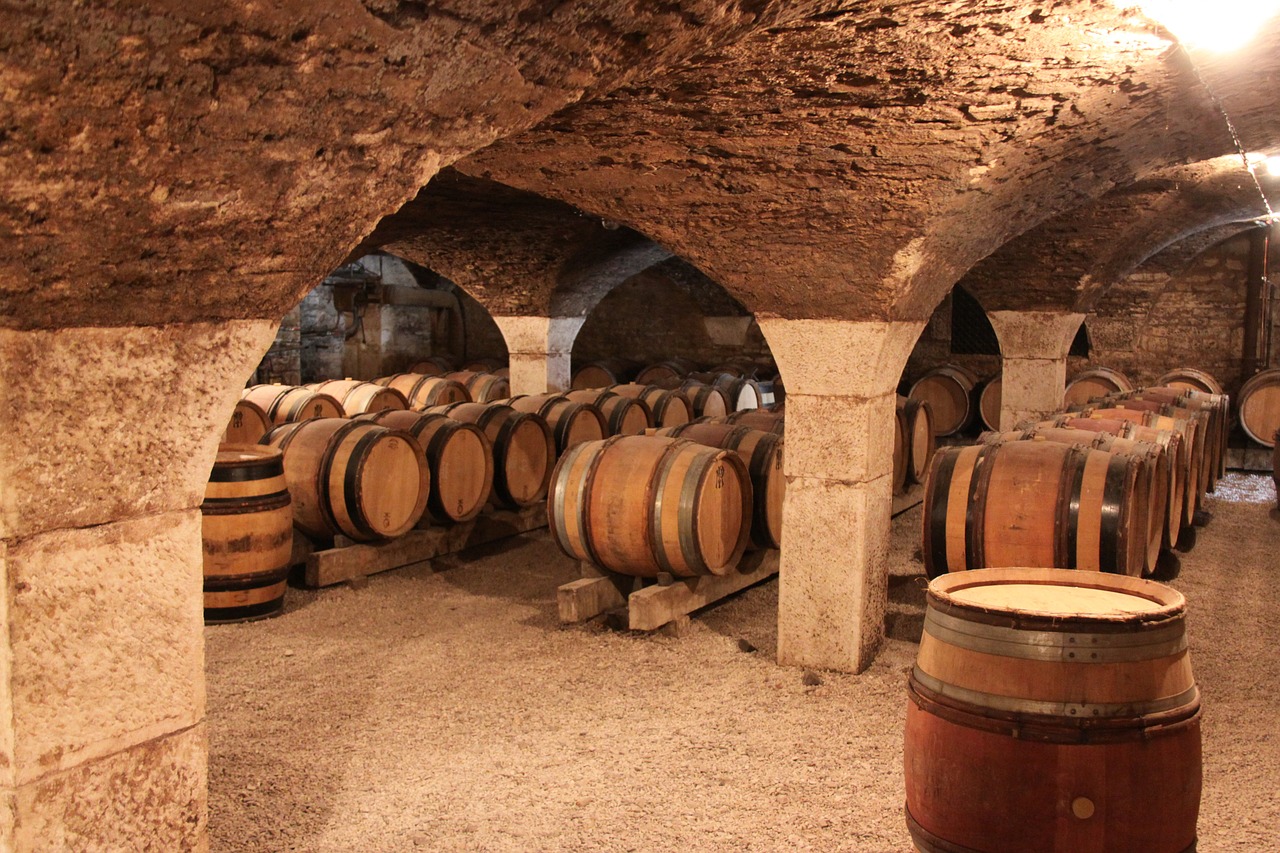
Domaine Joseph Drouhin (Beaune) is the undisputed starting point for anyone wishing to understand Burgundy in a single visit. Its magnificent cellar is housed in the historic Parliament of the Duke of Burgundy, built upon Roman foundations dating back over 2,000 years. A classic tasting features six of its 60 finest wines.
Château de Meursault is essential on the Côte de Beaune. Few estates can claim more than 1,000 years of history; its spectacular 11th-century cellars are a journey through time. The whites of Meursault — fresh and notably structured — justify any detour.
>Château du Clos de Vougeot deserves special mention. This walled fifty-hectare vineyard was founded in the 12th century by the monks of Cîteaux and is remarkably divided among some eighty owners. It was once home to the great stars of wine, Les Chevaliers du Tastevin.
Domaine Laroche and Château de Chablis are unmissable stops should the journey extend to the northern reaches of Yonne, where Chablis is produced exclusively from Chardonnay grown on calcareous soils rich in marine fossils — lending the wines their characteristic high acidity and mineral notes.
Domaine Chanson (founded in 1750) is one of the oldest producers in the region. It is home to a grand above-ground cellar known as the Bastion and stands as one of the great historic references of the Côte de Beaune.

Monuments and Heritage
Beaune is the wine capital and a remarkable town in its own right. Encircled by 13th-century ramparts, its historic centre is a feast for the senses, with narrow streets, timber-fronted houses, and charming bakeries, wine shops, and patisseries. The unmissable landmark is the Hôtel-Dieu de Beaune (Hospices de Beaune), built in the 15th century as a hospital for the poor during Burgundy’s Golden Age: its roof of glazed tiles arranged in geometric patterns is one of the most reproduced images in all of France.
Dijon, the regional capital, preserves the Palace of the Dukes of Burgundy — one of the most powerful courts in medieval Europe — and its mustards hold Protected Geographical Indication status. One should not leave without visiting the Burgundy Wine School, which offers official introductory courses in oenology.

Vézelay, a short distance to the north, is a World Heritage Site on account of its Romanesque basilica and is one of the historic departure points of the Camino de Santiago.
Gastronomy
Burgundian cuisine is among the most distinctive in France. Escargots à la bourguignonne — snails with garlic and parsley butter — are the obligatory starter. Bœuf bourguignon, a beef stew braised in red wine, is the signature dish. The region’s cheeses, particularly Époisses (washed in Marc de Bourgogne and pungently aromatic), Cîteaux (crafted by Cistercian monks), and Soumaintrain, make perfect companions to a Pinot Noir. For a celebratory dinner, Restaurant Le Benaton (Michelin-starred, in Beaune) and Château de Meursault offer memorable food and wine pairings.

Sobrelías Redacción
Sobrelías Redacción