


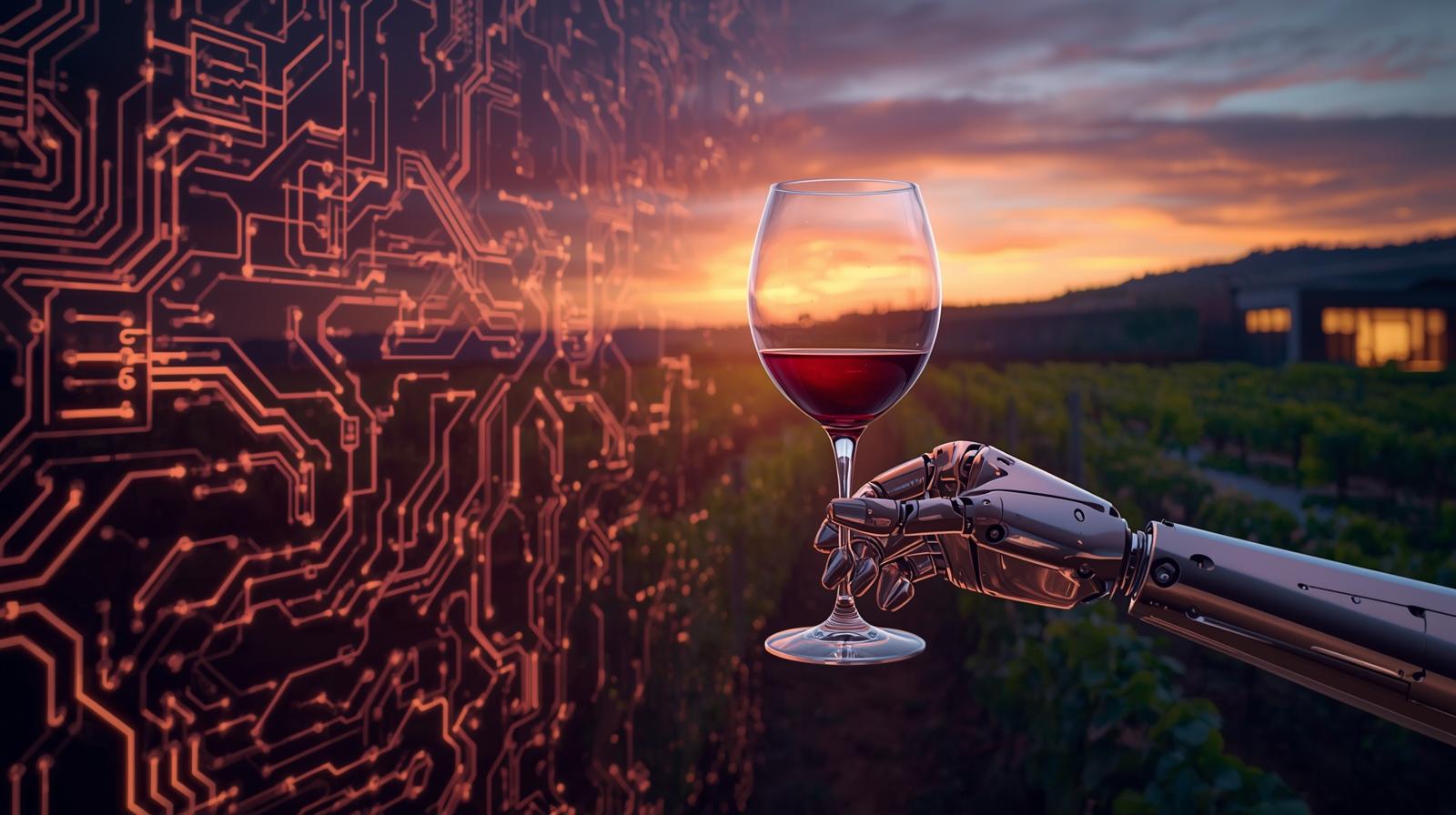
Artificial Intelligence in the Vineyard, Far More Than Predicting Harvests
The revolution is in the vineyard, not the winery
Step into a vineyard in Napa, Bordeaux, or the Yarra Valley in 2026, and you will see more than rows of vines. You will find sensors buried in the soil, drones flying over the canopy, and AI systems predicting harvest dates to within a matter of days.
This is no longer science fiction. At Chateau Montelena in California, digital vine monitoring — using technology adapted from facial recognition software — allows estate managers to assess the health of each individual vine from their mobile phones. These systems detect subtle changes in leaf angles and correlate them with sun exposure and water stress.
The AI that ‘tastes’ wine better than many humans
Here is the statistic that has gone most viral on social media: the company Tastry analyses wines chemically and maps consumer flavour profiles to predict individual preferences with over 92% accuracy. It does not predict harvests — it predicts which wine a particular person will enjoy before they have even tasted it. A digital sommelier based on chemistry.
There is more. Researchers at Southern Methodist University have built an AI tool that predicts the quality of a wine with approximately 89% accuracy by analysing the language used in reviews, identifying which terms have the greatest influence on the final score.
Water: the great battleground where AI is winning decisively
Estates using AI-driven irrigation systems have reported water savings of up to 30%. At Clos du Val in Napa Valley, viticulturalist Ryan Decker explains that each valve incorporates a flow meter capable of delivering irrigation by volume rather than duration, reducing waste and improving fruit quality.
In 2025, the Australian wine industry experienced its hottest summer on record, with yield drops of 18% in some areas. Cool regions such as Tasmania are seeing explosive growth in sparkling wine production as traditional zones suffer. Against this backdrop, AI has become a survival tool rather than a luxury.
The AI-designed wine that sold out in 72 hours
The most widely discussed case on social media: in 2025, a Tuscan start-up launched a wine called ‘Neural Vino’ — the first wine designed entirely by artificial intelligence. Critics awarded it 93 points. It sold out within 72 hours.
The debate dividing the industry: art or algorithm?
This is the richest tension of all, and the one generating the most debate on LinkedIn and Instagram among wine professionals. Some winemakers fear that relying on AI will push the industry towards safe, trend-driven styles at the expense of character, personality, and the expression of terroir. The hope, many argue, is that AI should help the artisan remain true to their own style — not push everyone towards a common median.
The barriers are also very real. Only 15% of wineries surveyed in the ProWein/University of Geisenheim study plan to invest in new digital marketing tools in 2025, and data management remains a challenge that is slowing AI adoption, particularly among smaller producers.

Sobrelías Redacción
Sobrelías Redacción