


Wine Tourism · Jacobean Routes · Heritage
The Wine Routes
A journey through the Denominations of Origin of the Camino de Santiago
From the Pyrenean vineyards of Somontano to the slate canyons of Ribeira Sacra, the Jacobean routes trace the most fascinating map of wine tourism in the Iberian Peninsula. Eight routes, more than twenty denominations of origin, and a thousand years of liquid history.
❧
“With bread and wine, the road is made.” This popular saying contains a truth well known to medieval pilgrims: the vine has always grown alongside the route.
The monasteries that dotted the Camino de Santiago not only offered shelter to travelers: they cultivated vineyards, produced wine, and preserved for centuries the native grape varieties that now fill our glasses. To walk the Jacobean routes is also to walk through the living history of Spanish viticulture. This feature guides you along each route—glass in hand.
The Routes
The French Way
~780 km
Saint-Jean-Pied-de-Port → Santiago
UNESCO World Heritage, 1993
01
The French Way is, without question, the great wine tourism itinerary of the Iberian Peninsula. Declared a UNESCO World Heritage Site in 1993, it was the first route ever to receive such recognition—something unprecedented at the time, as only monuments and cities were protected, not routes. From the Pyrenees to the cathedral of Santiago, this path crosses six Spanish regions and touches or runs through more than a dozen wine appellations.
“The French Way is not just a pilgrimage route: it is the most extraordinary wine corridor in Europe.”
The journey begins in the Aragonese Pyrenees with the Somontano D.O., a modern and cosmopolitan appellation that successfully combines international varieties—Chardonnay, Merlot, Cabernet—with native grapes such as Moristel and Parraleta. Its vineyards grow in the shadow of the Pyrenean range, and its wineries, clustered around the city of Barbastro, are a benchmark of avant-garde wine tourism in Spain. The surroundings blend high-mountain landscapes, Barbastro’s medieval old town, and the Diocesan Museum with one of the finest gastronomic scenes in inland Aragón.
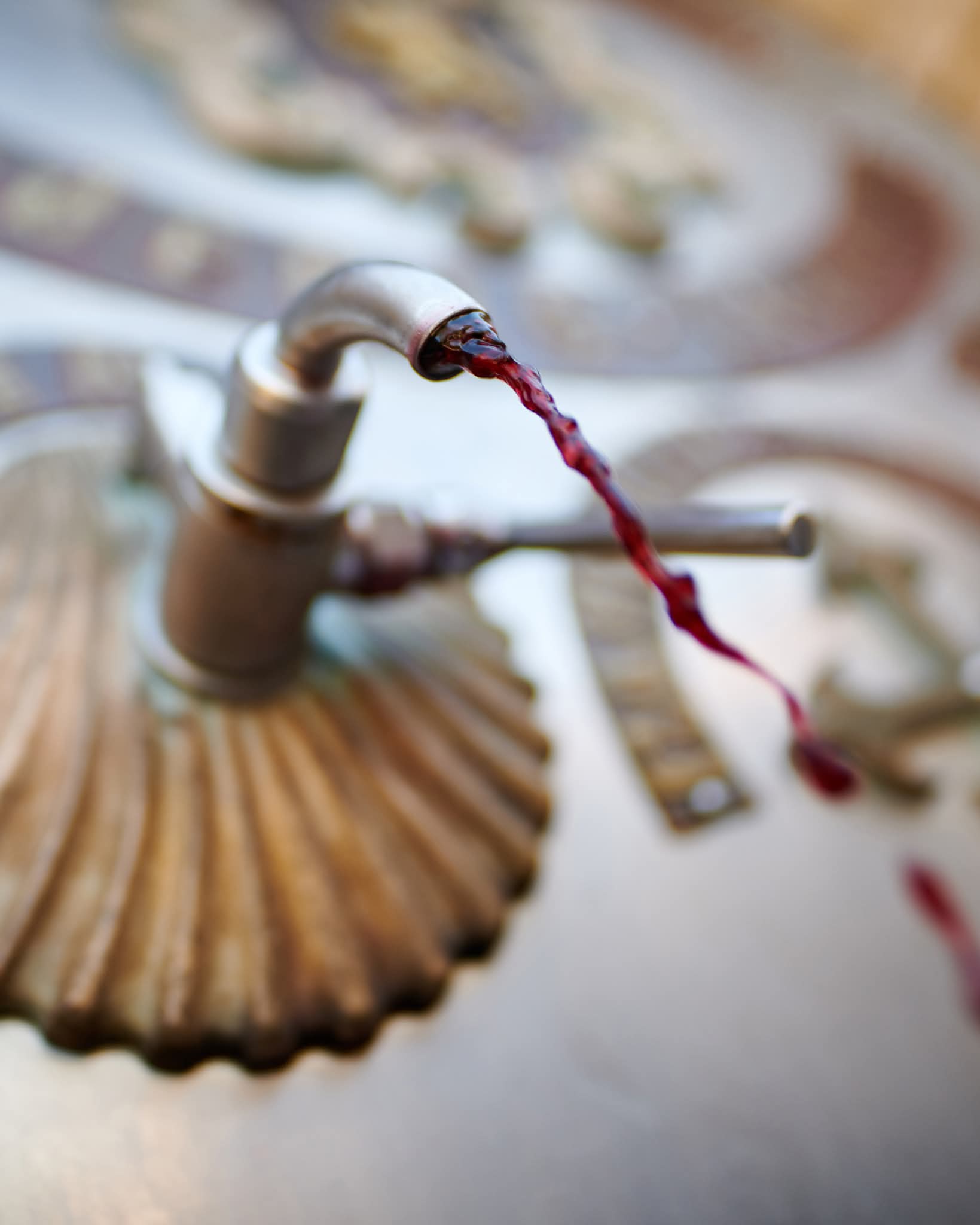
Upon entering Navarra, the pilgrim reaches the Navarra D.O. In Estella-Lizarra lies a unique landmark: the Irache Wine Fountain, where the Benedictine winery has offered free wine to walkers for centuries. This appellation is dominated by red varieties—Garnacha, Tempranillo, Cabernet—and produces some of the most renowned rosés in northern Spain. Navarra is also a land of Romanesque monasteries, medieval castles, and the city of Pamplona, with its impressive fortifications and historic old quarter.
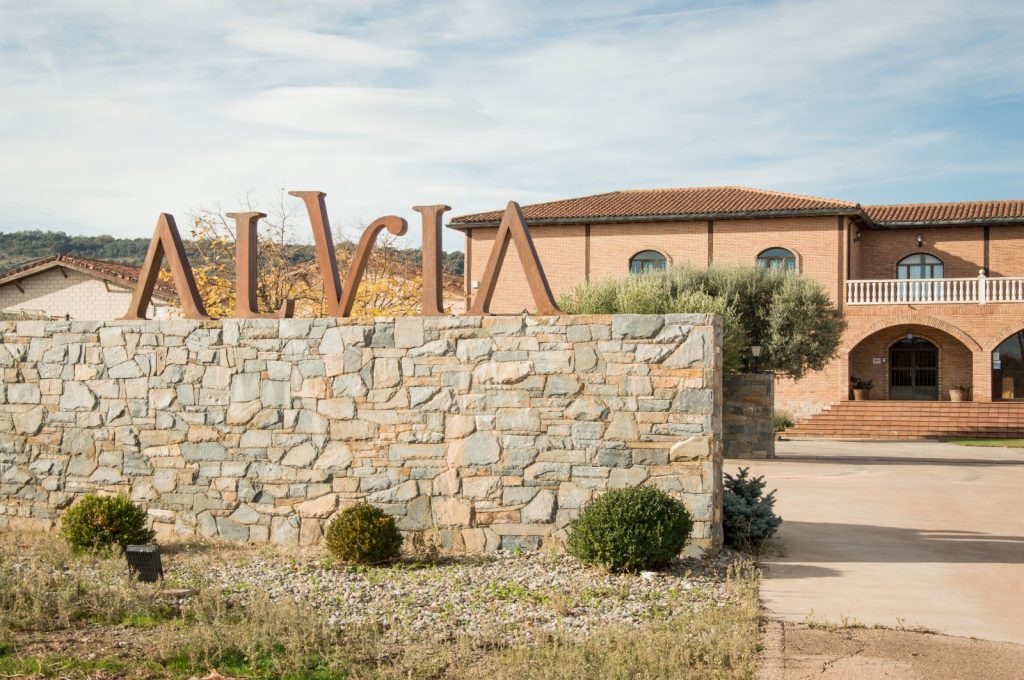
The arrival in La Rioja marks the wine heart of the route: Rioja D.O.Ca., Spain’s first qualified denomination of origin (1991). Logroño, Nájera, Santo Domingo de la Calzada, and Burgos structure this stage, combining refined Romanesque and Gothic art with landscapes of endless vineyards. Rioja Alta, with its red clay soils, produces the great crianza and reserva wines that have defined Spanish style worldwide. Alongside wine, the medieval heritage is inexhaustible: the Monastery of San Millán de la Cogolla (UNESCO), Burgos Cathedral (UNESCO), and the prehistoric site of Atapuerca form a cultural route without equal.
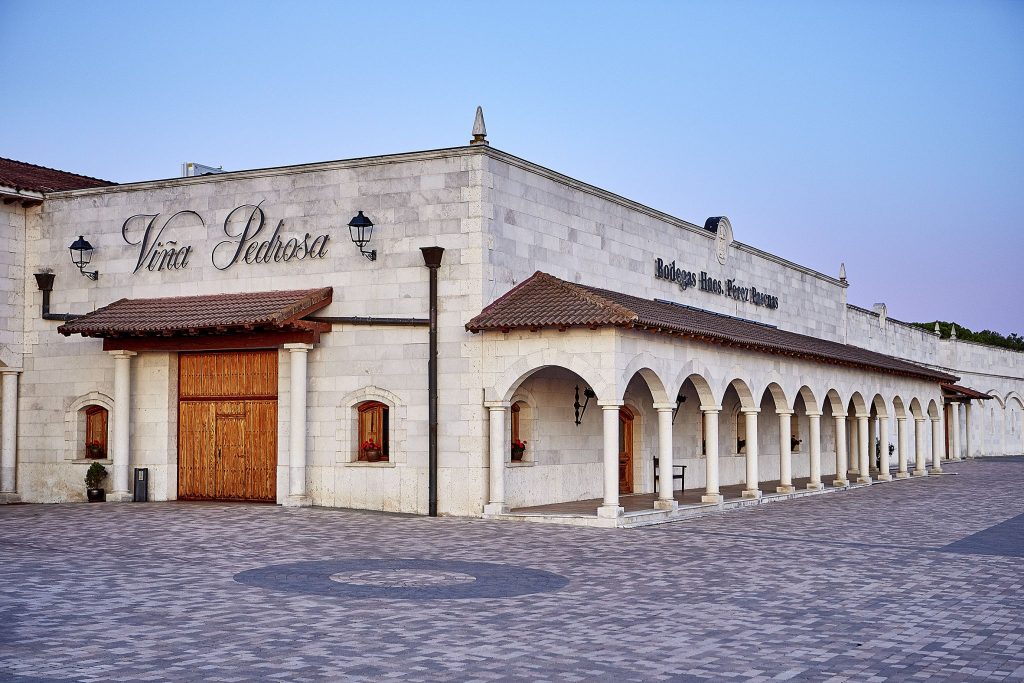
After crossing the Castilian plateau, the Arlanza D.O. appears in the province of Burgos, with Tempranillo-based reds of marked Atlantic character. Further on, in Valladolid and its surroundings, Ribera del Duero D.O. offers its legendary reds made from Tinto Fino—Tempranillo under its local name—grown on limestone soils and shaped by the extreme climate of the plateau. Peñafiel, with its castle-winery, and Aranda de Duero are essential stops. The Duero basin also includes Rueda D.O., for those who prefer the freshness of Verdejo grown on sandy soils.

Arriving in León, Tierra de León D.O. surprises with Prieto Picudo, a native variety with dense clusters and distinctive aromas. The medieval monasteries along the Camino—many of which produced wine for centuries—give historical meaning to every glass. Before entering Galicia, Bierzo D.O. offers its hillside Mencía and remarkably mineral Godello whites. Finally, in Galicia, the pilgrim reaches Ribeira Sacra D.O. and, completing the circle, Rías Baixas D.O. with its glorious Albariño—the perfect wine to celebrate arrival in Santiago.
Denominations of Origin
D.O. Somontano
D.O. Navarra
D.O.Ca. Rioja
D.O. Arlanza
D.O. Ribera del Duero
D.O. Tierra de León
D.O. Bierzo
D.O. Ribeira Sacra
D.O. Rías Baixas
Cultural Heritage
Burgos Cathedral (UNESCO)
Monastery of San Millán (UNESCO)
Atapuerca archaeological site (UNESCO)
Roncesvalles: medieval collegiate church
Pamplona: Renaissance walls
Santo Domingo de la Calzada
O Cebreiro: pre-Romanesque
Landscape & Nature
Pyrenees: Col de Lepoeder
Vineyards of Rioja Alta
Castilian plateau: light and silence
Ribeira Sacra canyons
Forests of O Cebreiro
Winery Highlight
The Irache Wine Fountain, next to the Benedictine monastery, is a symbol of Jacobean hospitality: for centuries, it has offered free wine to every pilgrim.
The Northern Way
~820 km
Irún → Santiago
UNESCO World Heritage, 2015
02
The second longest Camino route runs along the Cantabrian coast, between sea and mountains, from Irún to Santiago de Compostela, crossing the Basque Country, Cantabria, Asturias, and Galicia. Declared a UNESCO World Heritage Site in 2015 together with the Primitive Way, its landscape is radically different from the French Way: wild beaches, cliffs, estuaries, and green valleys make it one of the most beautiful itineraries in Europe.

From a wine perspective, the Basque Country introduces Txakoli, one of Spain’s most distinctive wines. The appellations Getariako Txakolina, Bizkaiko Txakolina, and Arabako Txakolina produce a dry, low-alcohol white, lively and slightly effervescent, the result of early harvesting in vineyards overlooking the Cantabrian Sea. Its pairing with Basque pintxos is inseparable. San Sebastián—Donostia—, crossed in the early stages, is a world gastronomic capital.
Bilbao, with Frank Gehry’s striking Guggenheim Museum, adds a top-tier contemporary cultural dimension. Santander offers its bay, the Magdalena Palace, and its Romanesque cathedral. In Asturias, although viticulture is limited, the Cangas Quality Wine stands out, while cider takes center stage. The Asturian pre-Romanesque heritage—San Julián de los Prados, Santa María del Naranco—turns this stretch into a journey to the origins of Spanish Christian architecture.
Entering Galicia via Ribadeo, the Northern Way gradually connects with the territory of Galicia’s great appellations. The Mariña Lucense coastline, with Augas Santas beach and the Eo estuary, is a protected natural spectacle. The final stretch connects with the flavors of Rías Baixas: Albariño and Atlantic seafood celebrate the arrival in Santiago.
The Primitive Way
~320 km
Oviedo → Santiago
UNESCO World Heritage, 2015
03
The oldest of all the Caminos. King Alfonso II of Asturias walked it in the 9th century to verify the discovery of the Apostle’s tomb, turning this route from Oviedo into the founding act of the pilgrimage to Santiago. That is why it is called Primitive: it is the origin of everything. It is also the most physically demanding, as it crosses the Cantabrian Mountains over passes exceeding 1,000 meters in altitude.
Oviedo, the starting point, holds a unique pre-Romanesque treasure: Santa María del Naranco, San Miguel de Lillo, and the Cámara Santa of the Cathedral are UNESCO-listed monuments that any lover of history should explore at length. The cathedral houses the relic of the Agate Casket and the Sudarium of Oviedo, and has itself been a pilgrimage destination since the Middle Ages—the Jacobean saying puts it clearly: “He who goes to Santiago and not to the Savior visits the servant and forgets the Lord.”
“The Primitive Way is the route where the silence of the mountains resembles that of the cellar: both hold secrets of centuries.”
In the heart of Asturias, the Cangas Quality Wine deserves special attention. Its vineyards, cultivated on terraces above the Narcea River at over 600 meters in altitude, preserve pre-phylloxera varieties that have disappeared elsewhere in Spain—Verdejo Negro, Carrasquín, Albarín Negro—producing wines of deep personality and very limited production, highly valued by connoisseurs.
Entering Galicia through Lugo transforms the landscape: low-lying mist, dense oak and chestnut forests, and the emergence of granite. Lugo is a jewel in itself: its Roman wall, the only one in the world completely intact, is a UNESCO World Heritage Site. The famous Calle de los Vinos, next to the cathedral, invites visitors to discover Galician wines while enjoying tapas. The final stretch of the Primitive Way merges in Melide with the French Way, where pilgrims pay tribute to pulpo a la gallega before the triumphant arrival in Santiago. By this point, the route already touches the territory of Ribeira Sacra D.O.
Denominations of Origin
V.C. Cangas
D.O. Ribeira Sacra (arrival)
Cultural Heritage
Roman walls of Lugo (UNESCO)
Pre-Romanesque art of Oviedo (UNESCO)
Cathedral of San Salvador, Oviedo
Monastery of Valdediós
Church of Santa Eulalia de Bóveda
Landscape & Nature
Cantabrian mountain passes over 1,000 m
Atlantic forests of Galicia
Narcea Valley (Cangas)
A Fonsagrada: peaks and mist
The Silver Route (Vía de la Plata)
~1,000 km
Seville → Santiago
Repurposed Roman road
04
The Silver Route is the great solitary path. While the French Way can become crowded in summer, this artery connecting Seville to Santiago over nearly a thousand kilometers offers pilgrims vast stretches of Extremaduran dehesa, immense skies, and encounters of rare human intensity. Its name does not refer to the metal: it derives from the Arabic al-balat, meaning “paved road,” as it largely follows the Roman road used by legionaries to connect southern and northern Iberia.
The starting point in Seville is already exceptional: the largest Gothic cathedral in the world, the Giralda, the Alcázar, and the Triana district create a beginning worthy of any European capital. From a wine perspective, the early stages pass through Condado de Huelva D.O.—famous for its Zalema whites and fortified wines—and then approach Montilla-Moriles D.O., in Córdoba, where Pedro Ximénez produces Spain’s most concentrated sweet wines, crafted through the solera system without the need for barrel aging.

Deep Extremadura, land of dehesas, storks, and ancient holm oaks, unfolds underfoot with Ribera del Guadiana D.O., a relatively young appellation (1999) divided into six subzones: Tierra de Barros, Montánchez, Cañamero, Matanegra, Ribera Alta, and Ribera Baja. Varieties such as Cayetana Blanca, Alarije, and Pardina for whites, and Tempranillo and Garnacha for reds, produce wines of Mediterranean character with ripe fruit notes. The city of Mérida, with its Roman theatre, amphitheatre, and bridge over the Guadiana—all UNESCO-listed—is the great cultural stop in Extremadura.
Salamanca, with its old and new cathedrals, medieval university, and Baroque Plaza Mayor—also UNESCO-listed—welcomes the pilgrim before crossing into Castilla y León, where the route touches Arribes del Duero D.O., set in the most spectacular river canyons of the plateau. In Galicia, where the Silver Route becomes the Sanabrés Way, the traveler enters Monterrei D.O., Galicia’s southernmost appellation, known for its Godello whites and Mencía reds grown on the slopes of the valley of the same name.
Denominations of Origin
D.O. Condado de Huelva
D.O. Montilla-Moriles
D.O. Ribera del Guadiana
D.O. Arribes del Duero
D.O. Monterrei
Cultural Heritage
Seville Cathedral and Giralda (UNESCO)
Roman Theatre of Mérida (UNESCO)
Old City of Salamanca (UNESCO)
Cáceres: medieval city (UNESCO)
Roman bridge of Mérida
Castle of Monterrei
Landscape & Nature
Extremaduran dehesa: holm oaks and vultures
Arribes del Duero canyons
Sierra de Gredos
Monterrei Valley (Ourense)
Monfragüe National Park
The Portuguese Way
~600 km (from Lisbon) / ~240 km (from Porto)
Lisbon or Porto → Santiago
05
The Portuguese Way is the second most traveled route of the Jacobean world, and perhaps the richest in oenological contrasts: its early stages in Portugal traverse some of the oldest wine regions in the world, while crossing into Spain leads directly into the paradise of Galician Albariño.
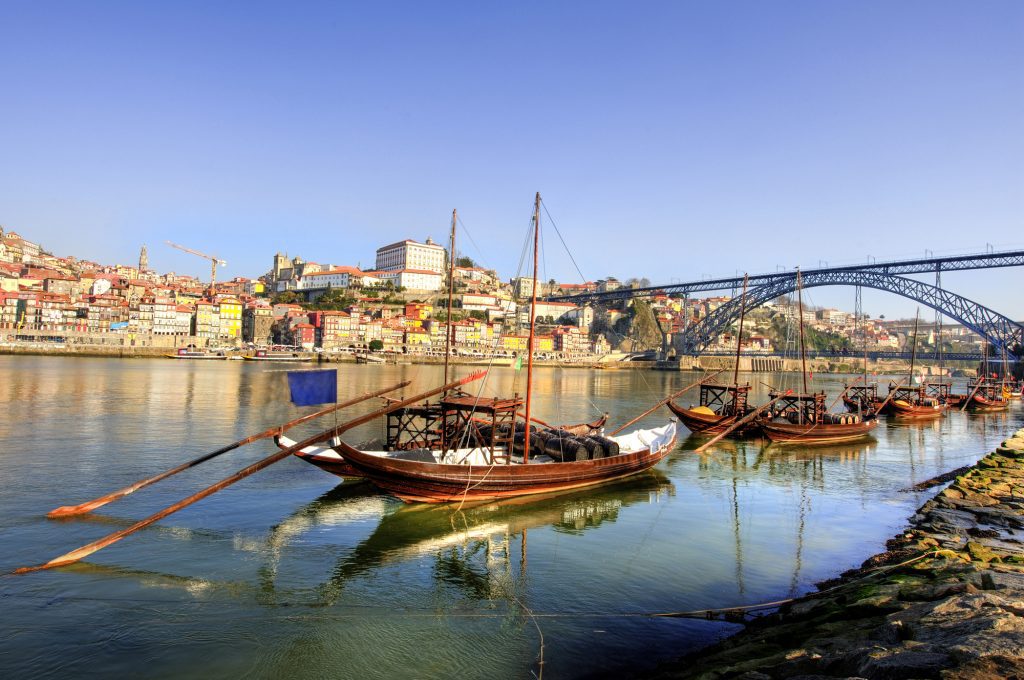
Starting from Porto immediately brings the pilgrim into contact with Porto D.O. and Douro D.O., two globally renowned appellations producing some of the world’s most prized wines on the slate terraces of the Douro River. Port wine—fortified with grape spirit—and Douro reds, powerful yet elegant, are constant companions in the early days. The city of Porto, with its historic center and the wine cellars of Vila Nova de Gaia, is a UNESCO World Heritage Site.
Heading north, the pilgrim crosses the Vinho Verde region, known for its young, light, slightly effervescent wines made from early-harvested grapes—hence the name “green.” The Alvarinho variety (Albariño on the Spanish side) is the queen of this region.
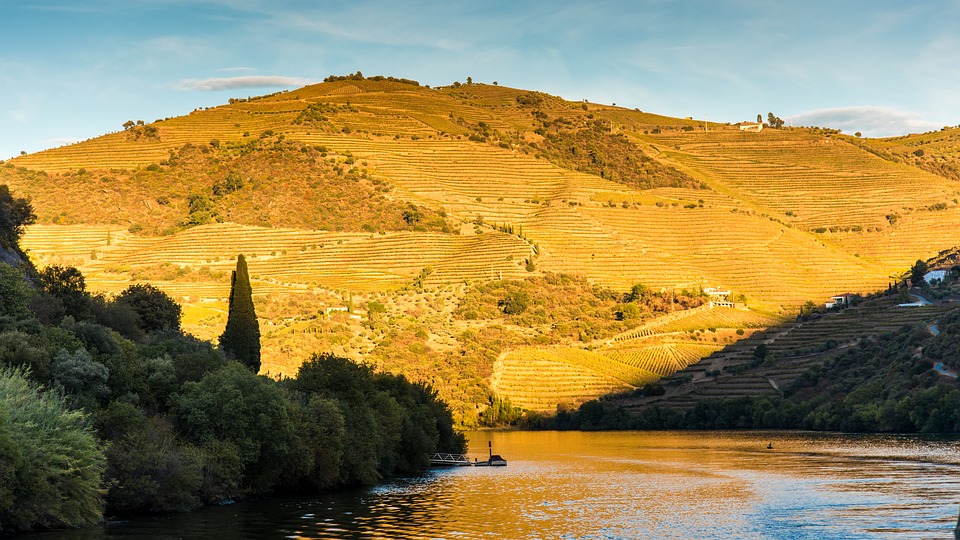
Crossing the Miño River at Tui marks the entry into Spain and Rías Baixas D.O. The final kilometers toward Santiago pass through landscapes of Albariño vineyards, granite granaries (hórreos), Romanesque churches, and silvery estuaries. The O Rosal subzone produces some of the most complex and floral Albariños. The Coastal Portuguese Way skirts the Vigo estuary and passes by the Monastery of Oia, facing the Atlantic.
The Winter Way
~270 km
Ponferrada → Santiago
06
In the months of January and February, when snow blocked the mountain passes of the French Way through the Ancares, medieval pilgrims sought a more forgiving alternative: they descended from Ponferrada into the Sil Valley, crossed southern Galicia, and reached Santiago skirting the mountain range. That historic detour is today the Winter Way, one of the most authentic and least crowded Jacobean routes.
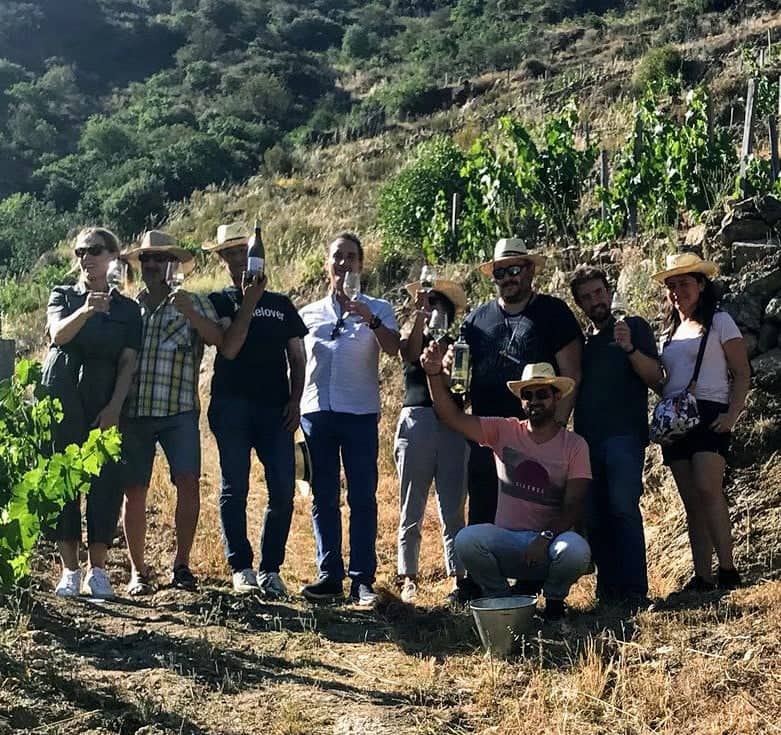
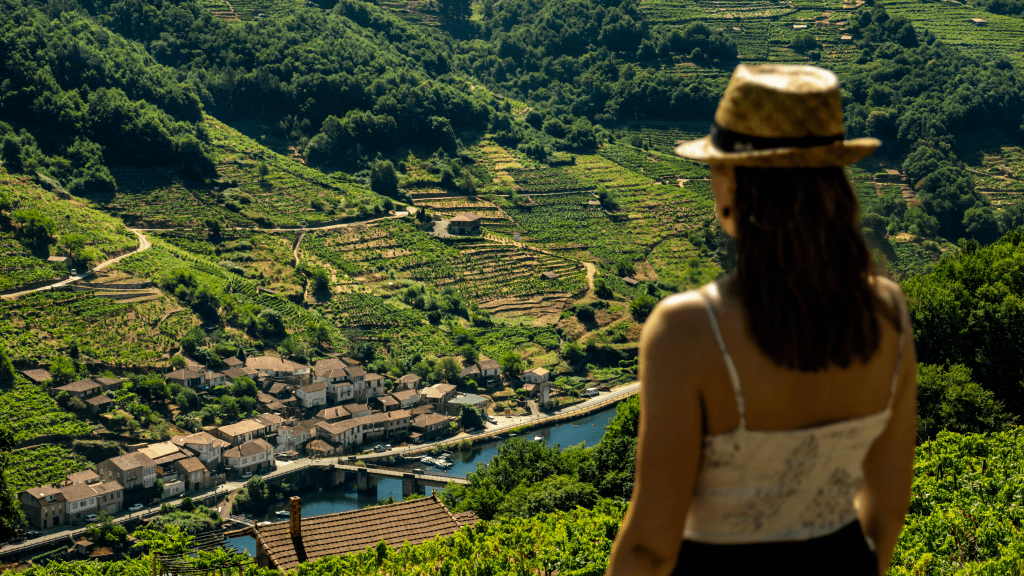
The journey begins in El Bierzo, where visitors can explore the impressive Templar Castle of Ponferrada, one of the best-preserved in Spain. From there, the route descends into the Sil Valley, whose canyon is among the most dramatic landscapes in Galicia: sheer slate walls plunging toward the river, where vineyards planted on near-impossible terraces produce the wines of Valdeorras D.O. O Barco de Valdeorras is the nerve center of this appellation, renowned above all for its Godello—a native white variety of great aromatic elegance and aging potential—and for its Mencía reds grown on slate terraces. Visiting local wineries, many accessible only by dirt tracks through ancient vineyards, is a raw and unforgettable wine tourism experience.
The route continues through Quiroga, where olive groves, vineyards, and forests coexist in a transitional landscape between inland Mediterranean and Atlantic climates. Further north, the pilgrim enters Ribeira Sacra D.O., whose name evokes the monasteries that cultivated these slopes along the Miño and Sil rivers during the Middle Ages. Mencía wines here—deep in color with red fruit aromas—are produced in vineyards that literally cling to the riverbanks, on terraces of slate and granite. The Amandi subzone, on the Sil’s banks, produces particularly elegant reds. The Winter Way eventually joins the Silver Route before reaching Santiago.
Denominations of Origin
D.O. Bierzo (departure)
D.O. Valdeorras
D.O. Ribeira Sacra
Cultural Heritage
Templar Castle of Ponferrada
Monasteries of Ribeira Sacra
Castro Caldelas: medieval castle
Rock-hewn churches of the Sil
Monforte de Lemos: collegiate church
Landscape & Nature
Sil Canyon: spectacular
Slate-terraced vineyards
Banks of the Miño and Sil
Chestnut and oak forests
Wine Insight
The vineyards of Valdeorras and Ribeira Sacra are among the most spectacular in Europe: slopes of up to 85% require manual harvesting and pulley systems. Every bottle is quite literally the result of heroic labor.
The English Way
~120 km (from Ferrol)
Ferrol or A Coruña → Santiago
07
The English Way takes its name from the pilgrims who arrived by sea from the British Isles, Scandinavia, and northern Europe. They disembarked in Ferrol or A Coruña and from there walked between 75 and 120 kilometers to Santiago Cathedral. It is the shortest of the main routes, but no less interesting.
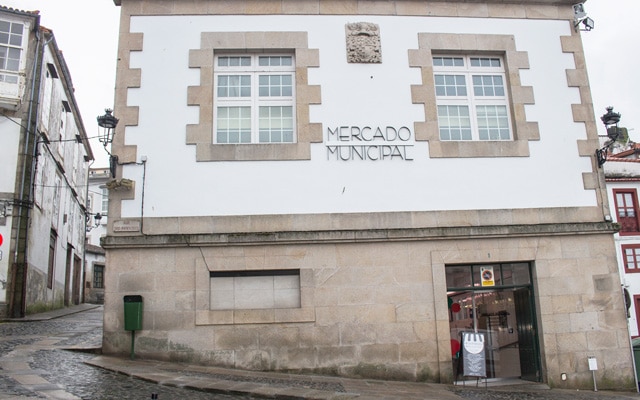
The landscape here is distinctly Galician: granite villages, paths lined with hórreos, eucalyptus and pine forests, estuaries, and the bay of A Coruña with its iconic Tower of Hercules—a Roman lighthouse declared a UNESCO World Heritage Site and the oldest functioning lighthouse in the world. Betanzos, with its ensemble of Gothic churches, is an essential stop.
From a wine perspective, the English Way passes through inland A Coruña, near Ribeiro D.O.—Galicia’s historic wine region, whose wines were exported along the Miño River in the Middle Ages. Here, white wines made from native varieties such as Treixadura, Torrontés, and Loureira accompany the seafood dishes that are ever-present along the route. As always, arrival in Santiago means entering the land of Albariño and Rías Baixas.
Denominations of Origin
D.O. Ribeiro (area of influence)
D.O. Rías Baixas (arrival)
Cultural Heritage
Tower of Hercules, A Coruña (UNESCO)
Betanzos: Gothic churches
Castle of San Antón, A Coruña
Ferrol: naval arsenal
Pontedeume: medieval bridge
Landscape & Nature
Galician Rías Altas
Coast of A Coruña
Humid Atlantic forests
Betanzos estuary
The Sanabrés Way
~110 km (from Ourense)
Zamora / Ourense → Santiago
08
The Sanabrés Way is the Galician variant of the Silver Route. While the latter continues north through Zamora and León, the Sanabrés diverges at Granja de Moreruela to cross the region of Sanabria—Zamora’s most mountainous and lake-rich area—and enter Galicia through Ourense. It is a route of contrasts: the solitude of the Castilian plateau gives way to the oak and chestnut forests of inland Galicia.
Lake Sanabria, the largest glacial lake in the Iberian Peninsula and one of Spain’s best-preserved ecosystems, is the great natural treasure of this stretch. Its cold, clear waters, within Sanabria Natural Park, highlight the contrast between high-altitude landscapes and the vineyards that appear as one descends toward Ourense.
Ourense, a quintessential thermal city—its hot springs emerge directly into the Miño River—is the great wine hub of the route. From here, the pilgrim is surrounded by four of Galicia’s five denominations of origin: Monterrei D.O. to the southeast, with its Godello and Dona Branca whites; Ribeiro D.O. to the west, with Treixadura and Torrontés; Ribeira Sacra D.O. to the northeast, with its heroic Mencía; and Valdeorras D.O. to the east, home to Spain’s most celebrated Godello. The final stretch to Santiago crosses Ribeiro territory and ends once again in Rías Baixas.
Denominations of Origin
D.O. Tierra del Vino de Zamora
D.O. Monterrei
D.O. Ribeiro
D.O. Valdeorras
D.O. Ribeira Sacra
D.O. Rías Baixas (arrival)
Cultural Heritage
Zamora Cathedral: Romanesque
Puebla de Sanabria: medieval town
Ourense: cathedral and thermal baths
Monastery of Oseira
Roman bridge of Ourense
Landscape & Nature
Lake Sanabria (Natural Park)
Sierra Segundera
Natural thermal springs of the Miño
Oak forests of inland Galicia
Thermal Curiosity
In Ourense, pilgrims can bathe in the burgas, hot springs that emerge at 65°C directly into the Miño River—a thermal reward halfway along the journey, before enjoying a glass of Valdeorras Godello.
A Toast to the Camino
The Camino de Santiago is, above all, an invitation to encounter: with oneself, with others, and with the land beneath one’s feet. In that land, the vine grows—and within the vine lives history.
To travel these routes with a glass in hand is to understand that wine tourism is not an added luxury, but an essential part of the journey: wine has always been the pilgrim’s sustenance, the monk’s trade, and the shared language of the peoples that the Camino united for a thousand years.
Today, those who walk it have the privilege of drinking it in its own land.
Buen Camino!
Wine Tourism Feature · The Wine Routes · Jacobean Routes Special

Sobrelías Redacción
Sobrelías Redacción