


The Fountain That Runs with Wine
A Stop You Simply Don’t See Coming
Bodegas Irache · Ayegui, Navarre · Camino de Santiago
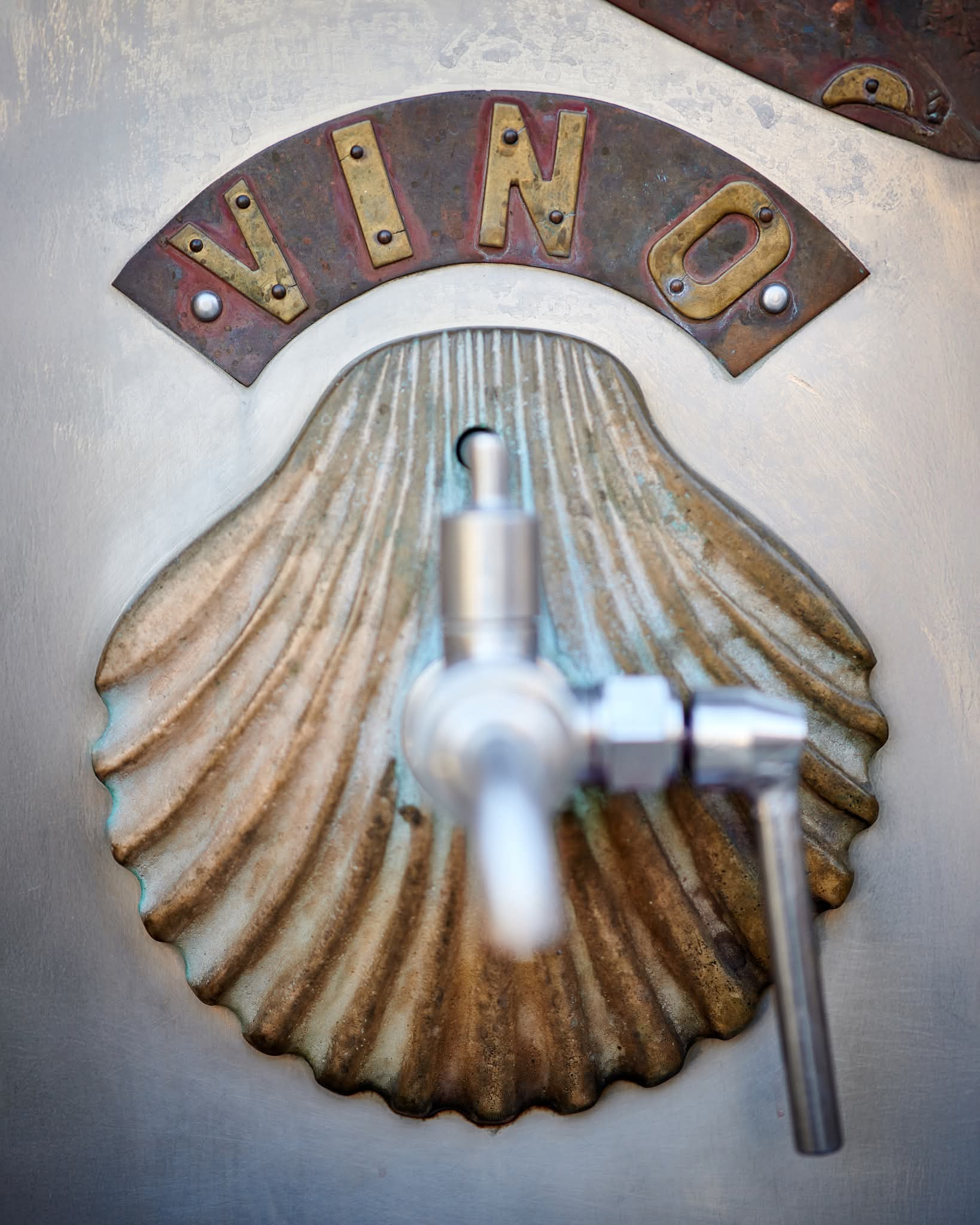
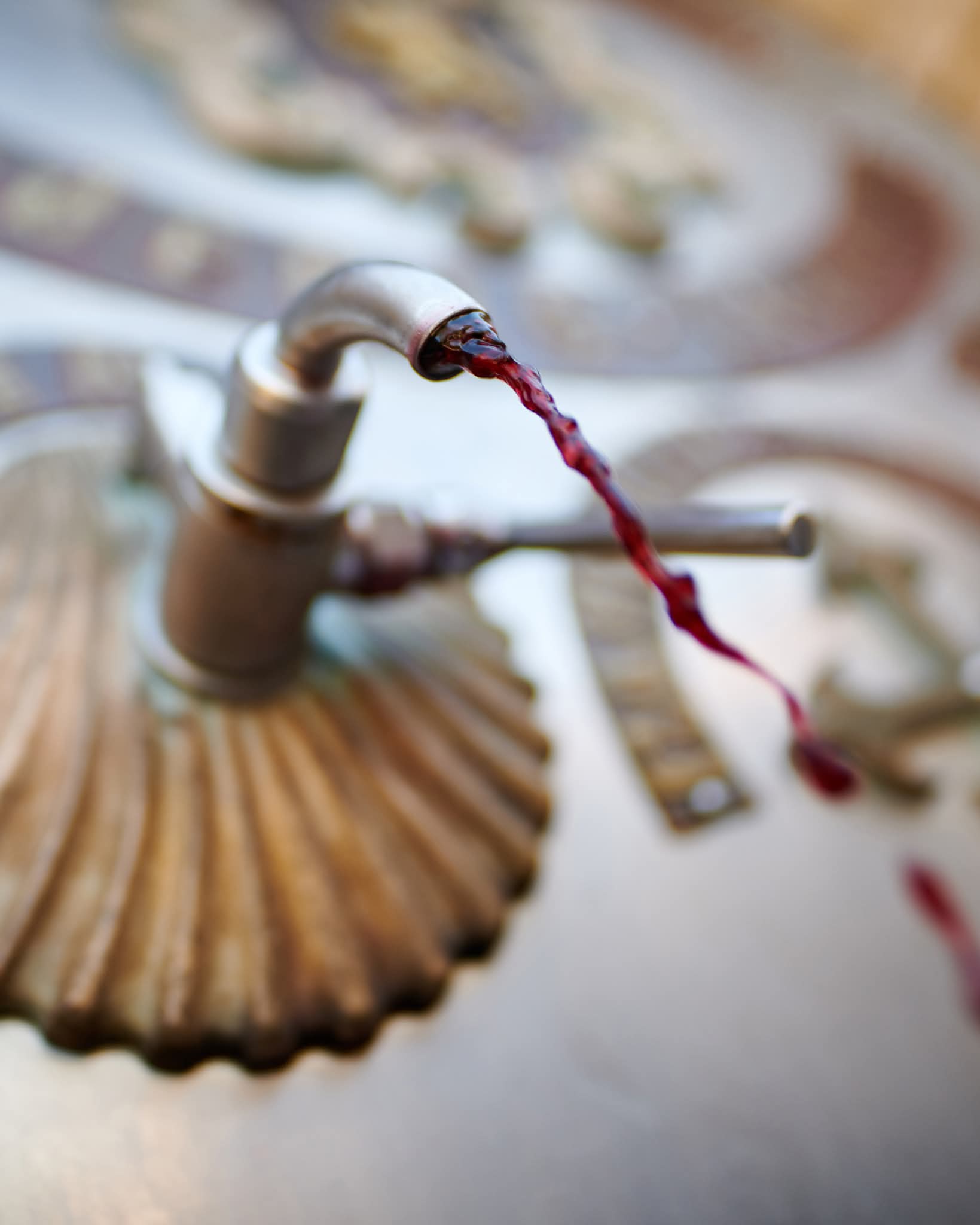
[dropcap]P[/dropcap]icture this: you have been walking for four hours, rucksack on your back, your feet quietly beginning to stage a protest, and then — set into a stone wall right at the edge of the path — you spot a fountain with two taps. You turn the first one. Water. Normal enough. You turn the second. Out comes wine. Actual wine, young and red and completely free of charge. That moment, which feels as though it has been lifted straight from a medieval legend, plays out every single day in Ayegui, a small Navarrese village a few kilometres from Estella-Lizarra, along the stretch of the Camino Francés that leads towards Los Arcos.
The place is the Wine Fountain of Bodegas Irache, and if you have never heard of it, there is a very good chance you have already watched its videos on TikTok or Instagram without realising you were looking at a real corner of Navarre.
One Tap, One Hundred Litres, and an Inscription That Says It All
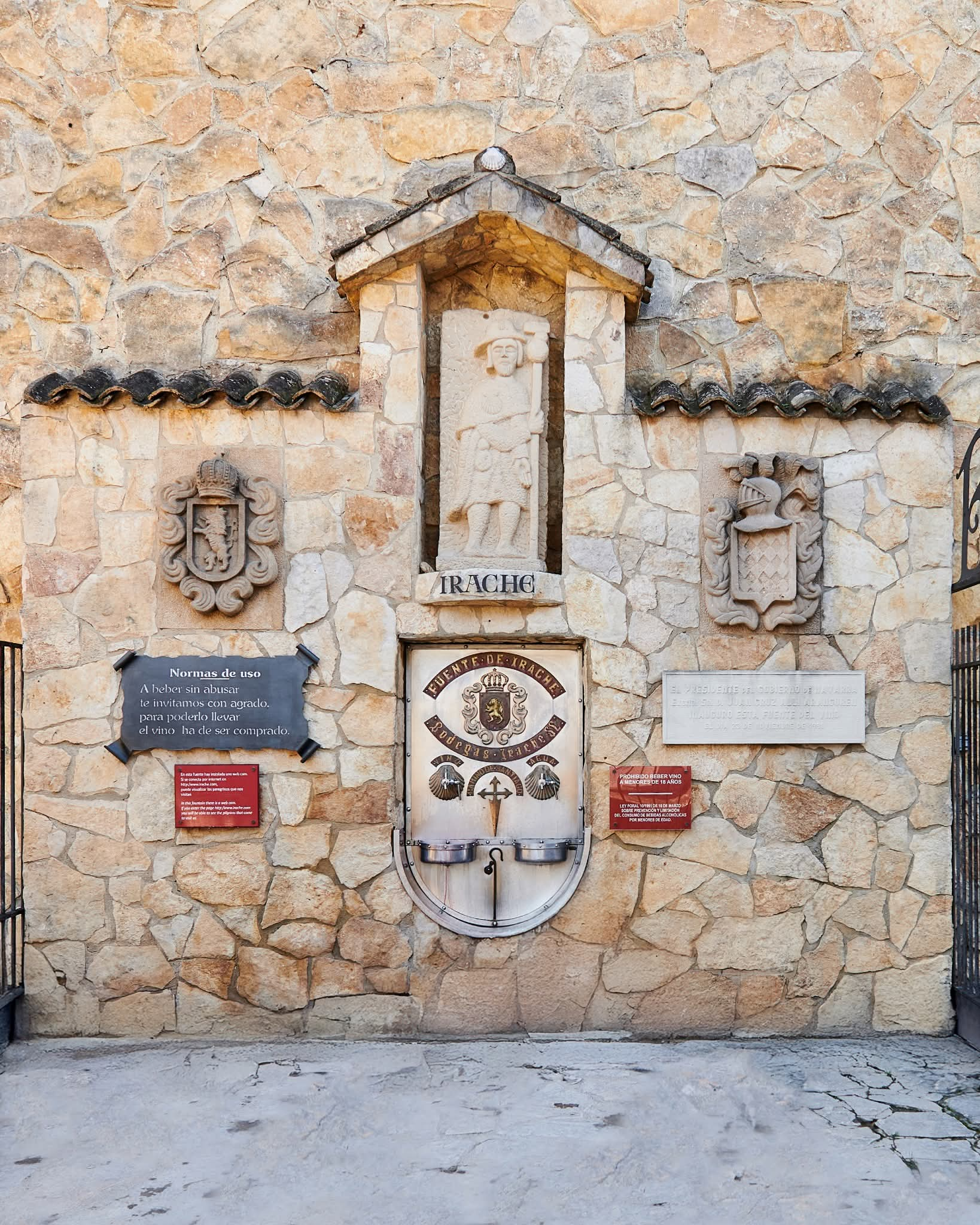
Each morning, the winery loads the fountain with roughly a hundred litres of its own young red wine from the Denominación de Origen Navarra. And there it stays, within reach of anyone who happens to pass by. Carved into the stone beside the tap is a line that perfectly captures the spirit of the place: “Pilgrim, if you wish to reach Santiago with strength and vitality, take a sip of this fine wine and raise a toast to happiness.” Below it, a rather more earthly note: “We are happy to invite you to drink, but not to excess — if you want to take wine with you, it must be purchased.” In other words: a symbolic sip, not a moving pantry.
Because yes, there have been pilgrims — few, but enough to cause some grumbling — who have taken advantage of the fountain to fill entire bottles, draining it irresponsibly and leaving those who came after with nothing. Most people, however, grasp the spirit of it: this is a gesture of hospitality, not a roadside bar.
A Story of Monks, Kings and Medicinal Wine
The fountain in its present form was formally installed in 1991, to mark the winery’s centenary. But the story behind it stretches back more than a thousand years. The Monastery of Irache, which stands directly opposite, was the first pilgrim hospital in Navarre — predating even the famous one at Roncesvalles. Its golden age came during the abbacy of Saint Veremundo, between 1056 and 1098, a man renowned for his generosity towards those in need, and one of the legends told about him claims he caused wine to spring forth from a fountain to sustain passing pilgrims. That a legend and a reality should converge on the same stone wall, centuries later, is rather something.
According to the fifth book of the Codex Calixtinus — essentially the first guidebook ever written for pilgrims travelling to Santiago de Compostela — the area around Ayegui had a long-standing reputation as a land of good bread and outstanding wine. The Benedictine monks did not give it away out of whim: wine was used as a restorative for walkers who arrived exhausted or unwell after punishing days on the road. It was, quite literally, medicine.
In the more recent revival of the tradition, wine was first offered in an earthenware vessel. “The trouble was that we had to take the cup away because people kept walking off with it,” recalls Ana Santesteban, daughter of the man who revived the modern tradition at the winery. From shared cup to tap embedded in the wall was a perfectly logical step: if they take your glass, you fit a tap and let everyone bring their own.
The Building That Cradles the Wine Has Its Own Story
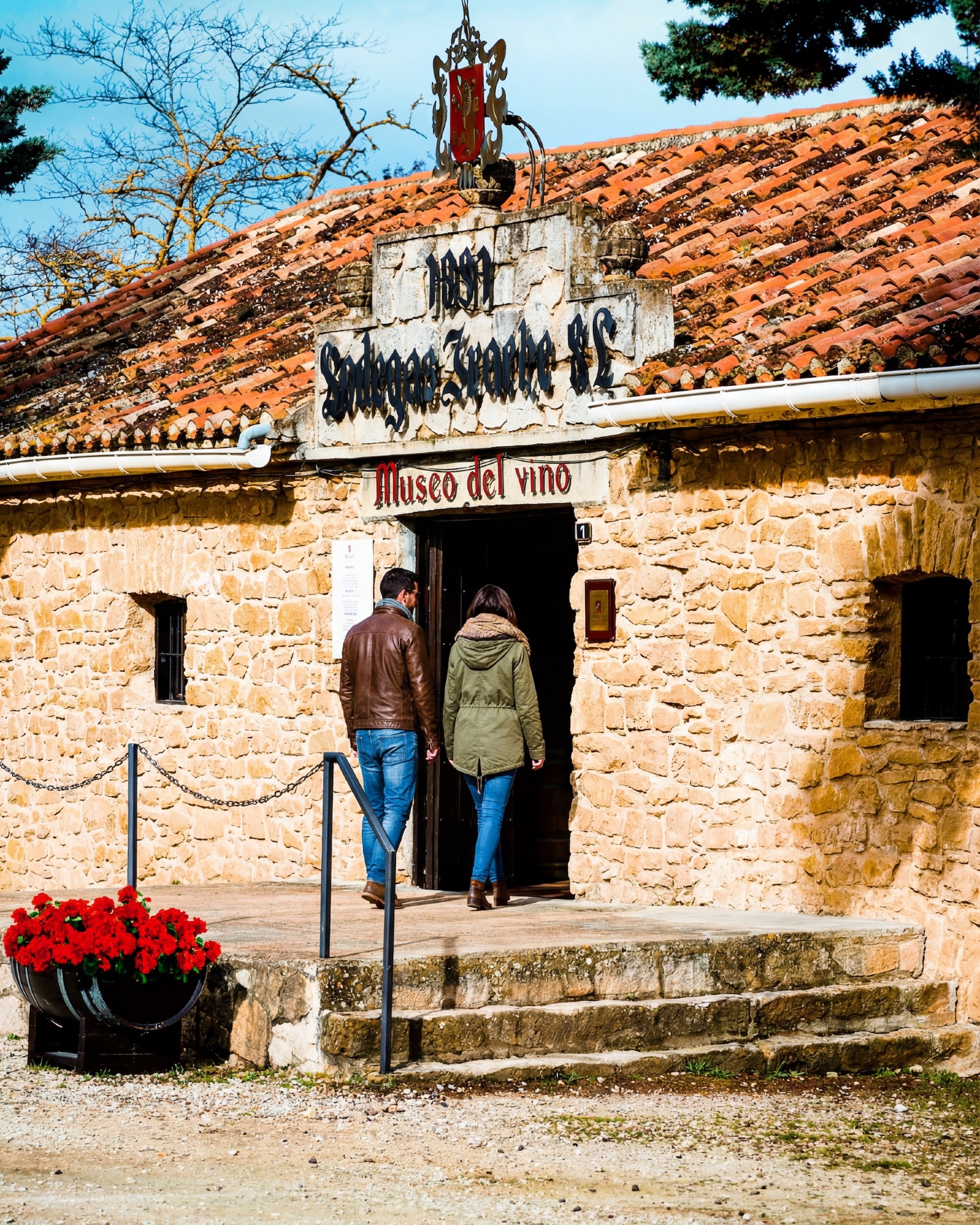
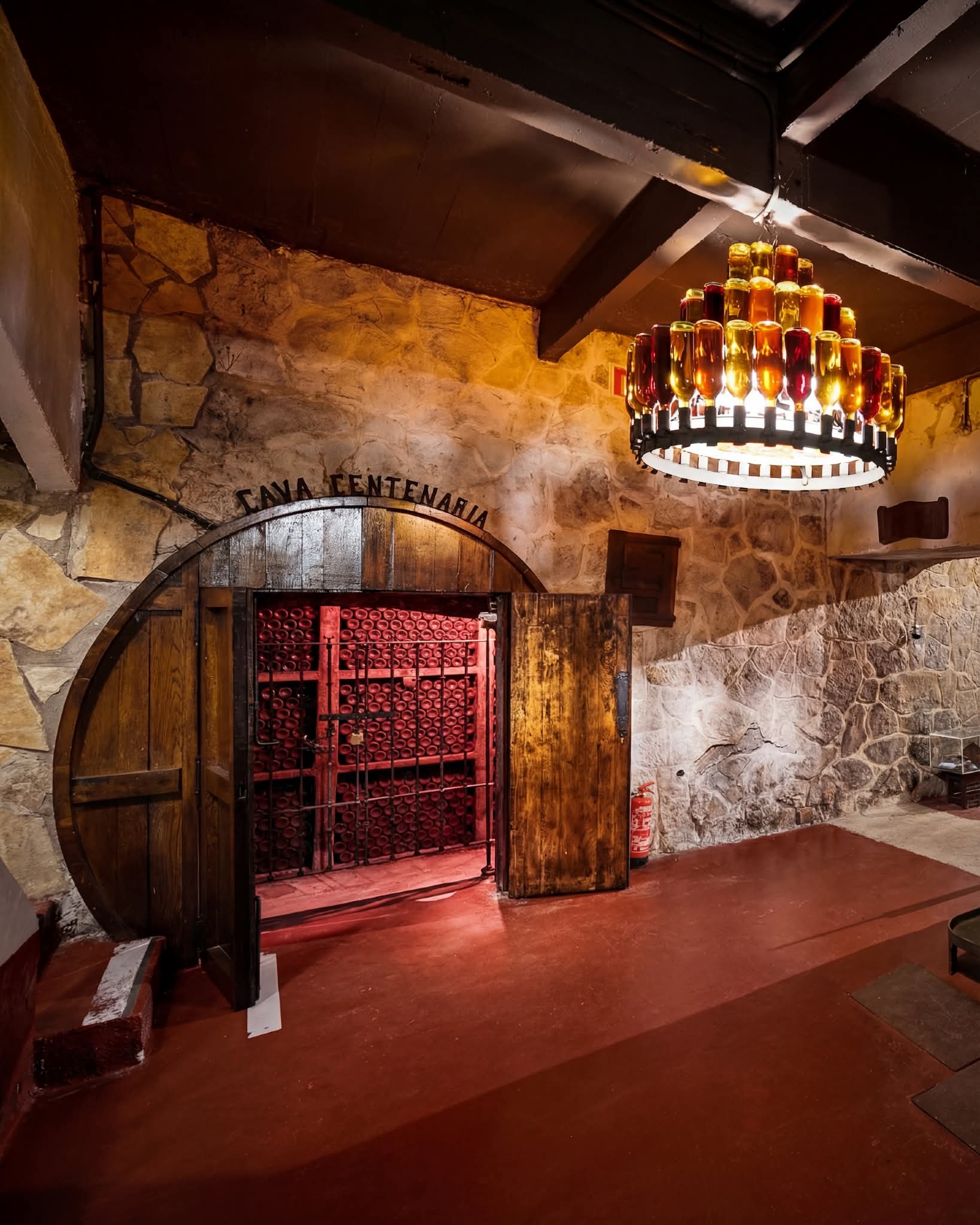
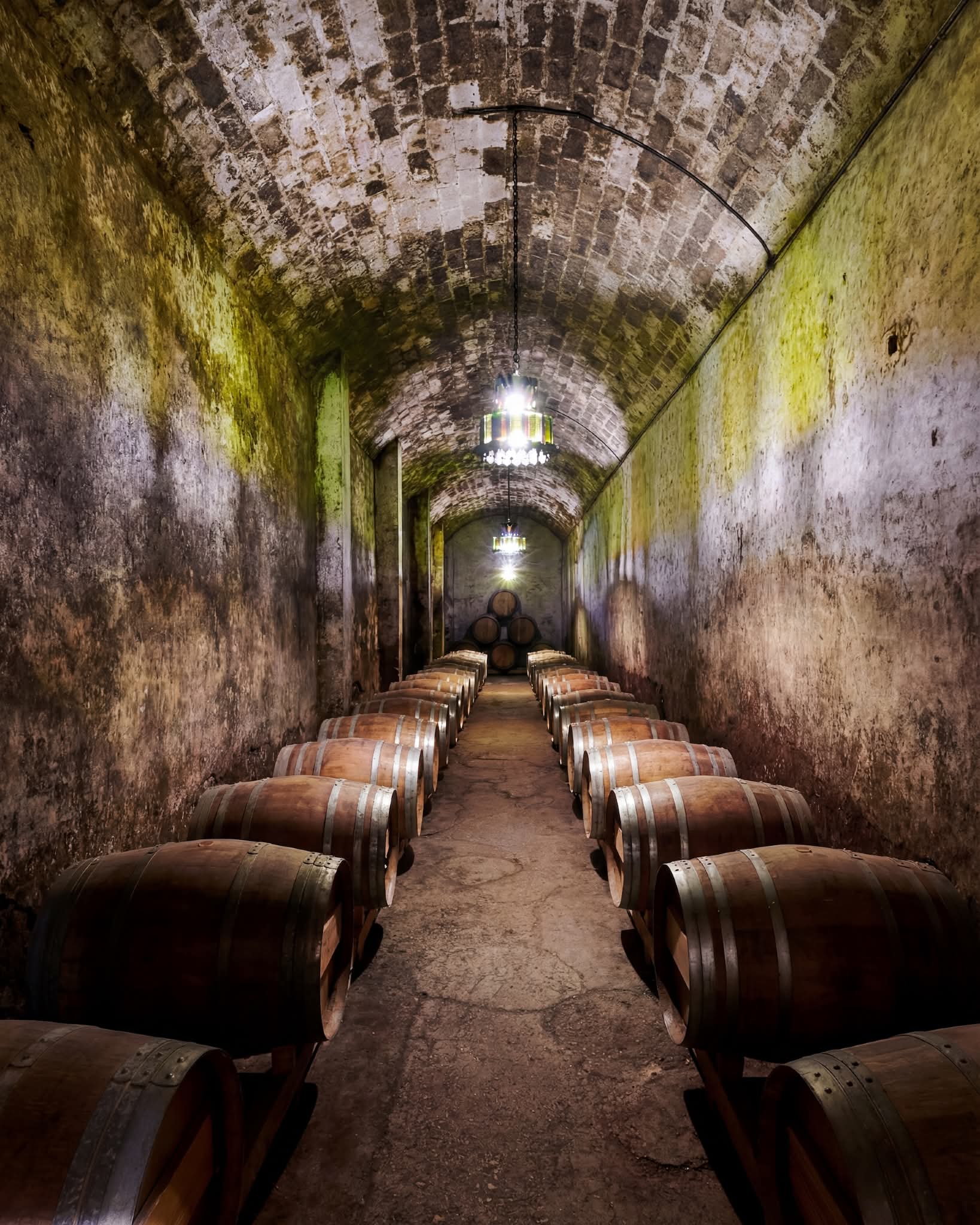
Very few visitors realise that right beside the fountain stands an ageing cellar that the winemakers here affectionately call ‘the wine cathedral’. It was opened in the 1950s and is remarkable for its columns and rounded arches, with space for around ten thousand barrels. If the fountain hooks you, step inside: it is well worth seeing where the wine sleeps before it ever reaches the tap.
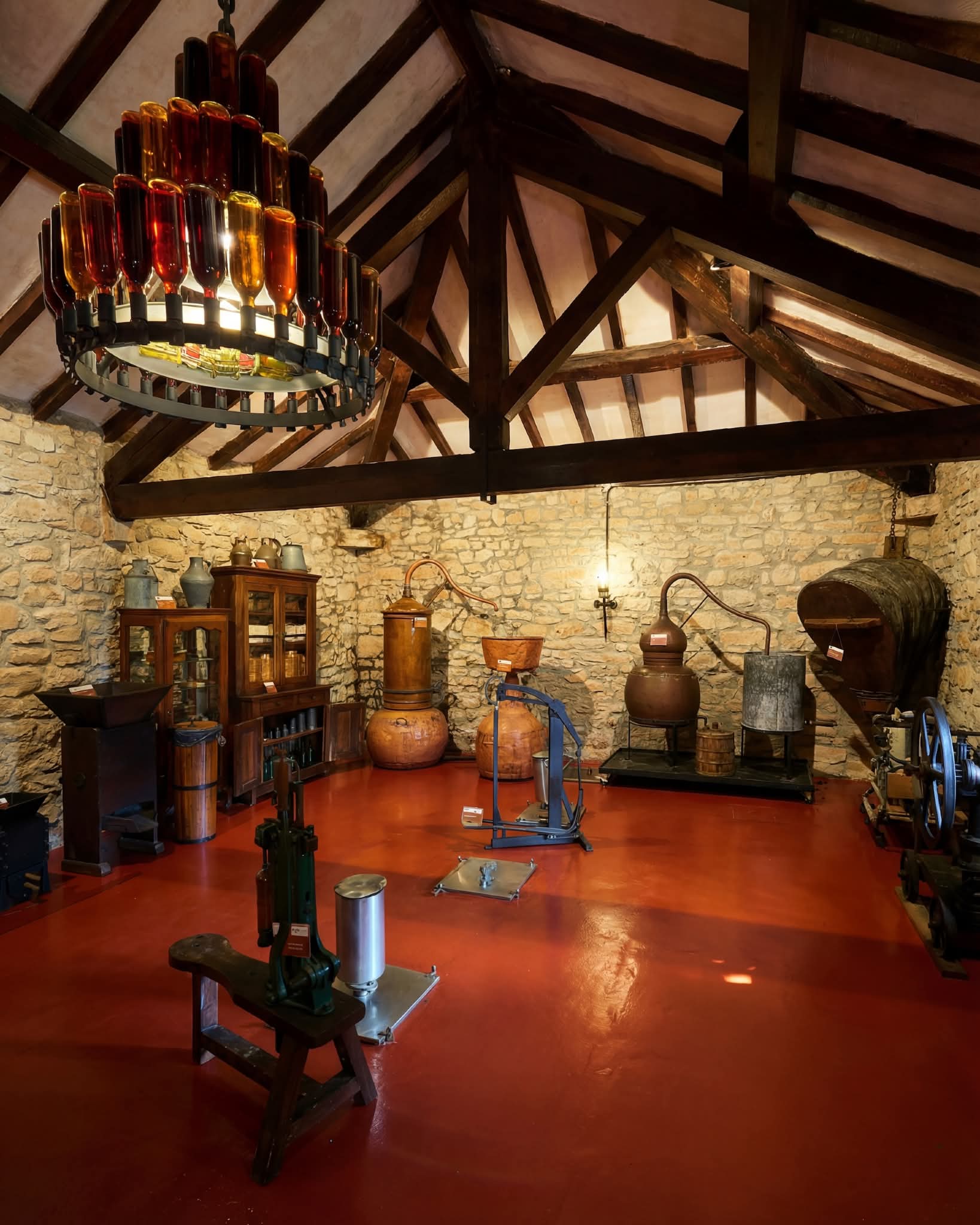
And if you want a tangible keepsake from the visit, the winery offers an exclusive stamp for the pilgrim’s credential — the document that certifies the stages of the Camino. You can get it at the Bodegas Irache Wine Museum on Saturdays and public holidays, or directly at the offices on working days.
The Camera That Makes You Famous Without You Knowing
One of the most curious details about the place is that the winery installed a live webcam pointing directly at the fountain, accessible from their website. Which means that while you are standing there laughing and taking photos with your travel companions, someone on the other side of the world may well be watching you in real time without your knowledge. Thousands of people check it every day from wherever they happen to be, turning that Navarrese stone wall into a small but surprisingly global window onto the Camino.
An Idea So Good It Was Borrowed in Italy
The influence of Irache eventually reached the Abruzzo region. In 2016, a wine fountain was inaugurated in Villa Caldari di Ortona along the Cammino di San Tommaso, a pilgrimage route between Rome and Ortona. Its owners, Dina and Luigi of the Dora Sarchese winery, openly acknowledge on their website that the idea came to them while walking the Camino de Santiago and stopping at the very fountain we have been describing. Their underground tank holds three thousand litres and runs around the clock — a dose of viticultural hospitality that has rather successfully crossed borders.
How to Get There If You Are Not a Pilgrim
You do not need hiking boots or a rucksack to visit. Guests staying in Estella, Pamplona, Logroño, or other nearby towns can reach it perfectly easily by car via the A-12 motorway — known locally as the Autovía del Camino — with a turn-off towards Estella and Ayegui. The space around the fountain is modest, so it is worth avoiding the early morning hours during the high season, when the flow of pilgrims is at its heaviest. At other times, the stop takes no more than a few minutes: just long enough for a sip, a photograph, and a smile.
“Pilgrim, if you wish to reach Santiago with strength and vitality, take a sip of this fine wine and raise a toast to happiness.”
— Inscription on the Wine Fountain, Bodegas Irache, Ayegui, Navarre

Sobrelías Redacción
Sobrelías Redacción