


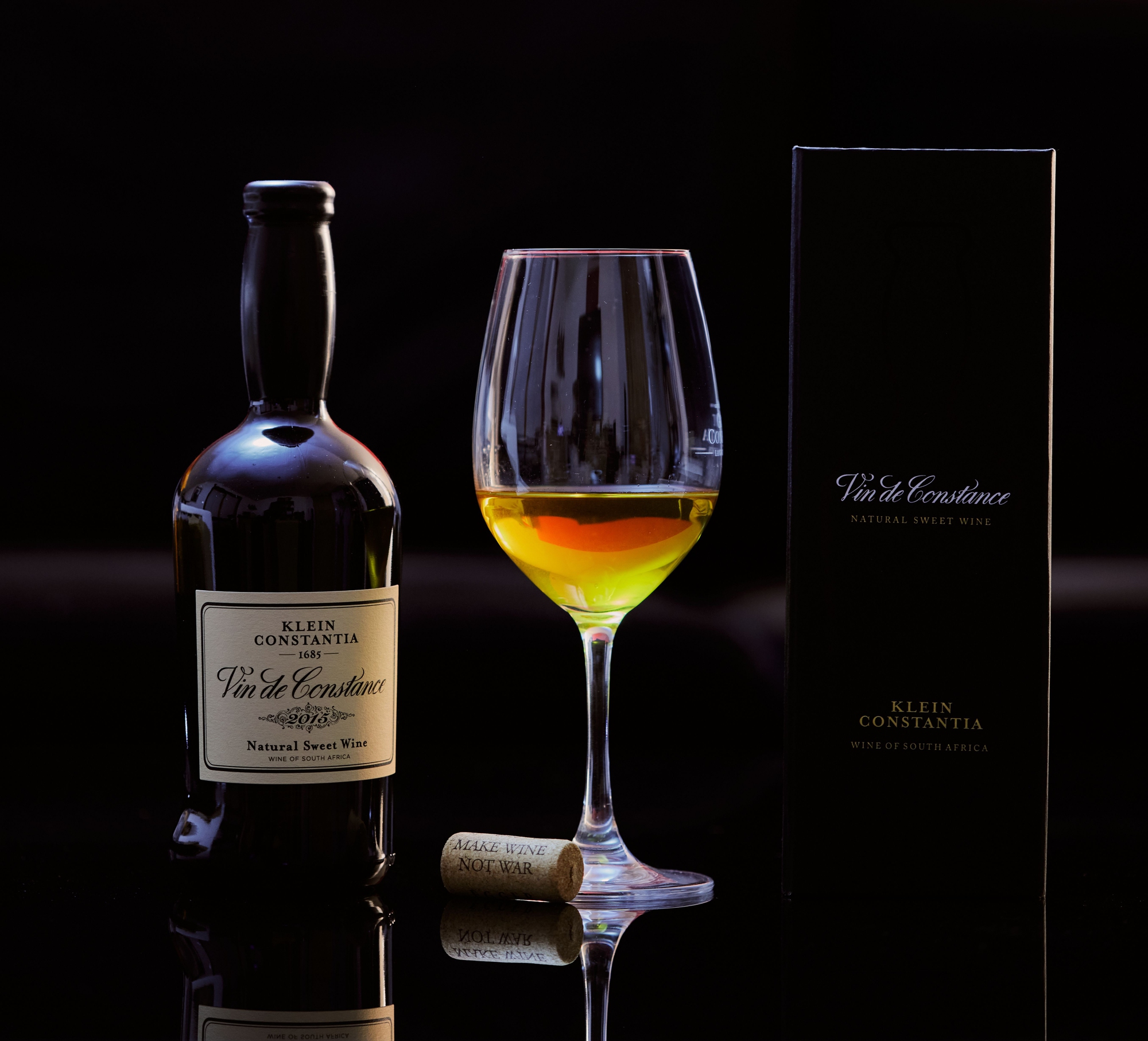
The Estate Born of a Scientific Decision
The history of this wine begins with an act of botanical rigour that would seem perfectly contemporary today: a colonial governor crossing the southern tip of Africa with soil samples in hand, searching for the precise place to plant his vines.
Constantia, the first wine estate in southern Africa, was established in 1685 by Simon van der Stel, Governor of the VOC at the Cape. Van der Stel, a passionate viticulturalist, was the first to recognise the potential of the decomposed granite soils of this region looking out over False Bay, surrounded by ocean on two sides. He had ordered soil samples to be taken from across the Cape region for analysis, and chose this spot to plant his vines, naming it Constantia.
The name Constance was given in honour of Simon van der Stel’s wife. A wine christened with a woman’s name, destined to conquer kings. There is something in that gesture that perfectly prefigures what this wine would become: a gift conceived for those who deserve only the finest.
After Van der Stel’s death in 1712, the estate was divided and sold in three parts. The portion surrounding the manor house was sold to the Cloete family in 1778, who expanded the vineyards and introduced varieties such as Muscat Blanc à Petits Grains. Upon the death of Hendrik Cloete in 1818, the estate was divided, and the upper portion became known as Klein Constantia. It was precisely under the Cloetes that Vin de Constance reached the summit of its worldwide fame.
The Wine That Poets Drank and Consoled an Emperor
Few wines in history can claim a literary lineage as extraordinary as this one. It does not appear in oenology textbooks. It appears in poems. In novels. In the final wishes of a man who had conquered Europe.
Napoleon Bonaparte had up to 1,126 litres of Constantia wine in wooden barrels sent to him every year at Longwood House, his residence in exile on Saint Helena, from 1815 until his death in 1821. The Comte de Las Cases recounted that, on his deathbed, Napoleon refused everything that was offered to him except a glass of Constantia wine. He did not ask for water. He did not ask for his medicine. He asked for Constantia. There is something deeply moving in that detail: the last sensory pleasure of the man who had redrawn the map of Europe was a sip of this South African granite wine.
The French poet Baudelaire, after visiting Groot Constantia, found that the taste of its wine lingered in his mind for a long time. In his great poem Les Fleurs du Mal, published in 1857, he associates it with the most intense of experiences: «je préfère au constance, à l’opium, aux nuits, l’elixir de ta bouche où l’amour se pavane» — “I prefer to Constance, to opium, to the nights, the elixir of your mouth where love struts.” That Baudelaire places this wine in the same breath as opium and the night says everything about its power over the senses.
Its sweet wines are celebrated in the literature of Austen, Dickens and Baudelaire; sought by Napoleon during his exile; and its wines supplied the courts of Europe throughout the eighteenth and nineteenth centuries. And yet, as with so many beautiful things, catastrophe came.
The wine languished into bankruptcy in the 1870s, until it was reborn with the first harvest of Vin de Constance in more than a century, in 1990. Phylloxera had devastated the vineyards in the final decades of the nineteenth century, and with them was lost not only the production but also, for decades, the precise memory of how the wine had been made. A wine that had graced the tables of Louis XVI and Marie Antoinette, that had eased Napoleon’s exile, that had inspired verses in Baudelaire, fell silent for a century.
The Resurrection: Duggie Jooste and the Search for the Lost Vine
In the 1980s, Duggie Jooste of Klein Constantia estate, together with winemaker Ross Gower, decided to attempt to recreate the original wine. The idea was first proposed by viticulturalist Professor Chris Orffer.
The undertaking was as much archaeological as oenological. How was the original Vin de Constance made? Which grape variety was used exactly? It was crucial to find plant material that came as close as possible to a variety used for the ancient Constantia. They had exceptional good fortune when Ernst le Roux, one of the most eminent viticulturalists in the country, was able to propagate a special clone of Muscat de Frontignan at the Ernita nursery in Wellington. Since no records exist of Muscat de Frontignan being imported to South Africa since the time of Simon van der Stel, it is likely that the original stock came from his very own vineyards. The same clone. The same vines, three centuries later.
The formula proved a great success, with consistent quality maintained across the years. Klein Constantia released its first harvest of the modern era in 1986, and has not stopped earning international acclaim since. In 2011, the Jooste family sold Klein Constantia to investors Zdenĕk Bakala and Charles Harman, who merged the estate with the Anwilka vineyards in 2012, bringing into the team Hubert de Boüard of Château Angélus and Bruno Prats, formerly of Château Cos d’Estournel. The arrival of these Burgundian and Bordelais figures was no coincidence: it is the most eloquent signal that this South African wine plays in the highest league in the world.
Muscat de Frontignan and the Secret of the Winemaking
The Klein Constantia estate, described as one of the most beautiful vineyards in the world, is situated among centuries-old trees and lush vegetation on the foothills of the Constantiaberg, with magnificent views over the Constantia Valley and False Bay. The decomposed granite soil, gently cooled by ocean breezes, and a history of 340 years give its wines conditions that are utterly unique.
For the making of Vin de Constance, each lot of grapes is kept separate. On one hand, the ripest berries with good acidity are set aside; on the other, raisined grapes are selected for their sugar concentration. Afterwards, 50% of the wine ages in 500-litre barrels and 50% in French oak foudres for 36 months on its lees. Finally the different wines are blended and the wine rests for a further 6 months before bottling.
Fermentation takes place in oak barrels and can last up to a full year due to the richness of the must. The wine is then kept in barrel for up to 5 more years on its lees, which adds additional layers of richness and texture.
The result is a wine to which no alcohol is added — hence its designation as Natural Sweet — where all the sweetness comes exclusively from the grape. It is not a fortified wine. It is a wine that has arrived where it is entirely on its own terms, through patience, ripe fruit and time.
Technical Sheet
| Appellation | Constantia WO — Coastal Region, South Africa |
| Producer | Klein Constantia Estate |
| Estate founded | 1685 — Simon van der Stel |
| Vintage | 2015 |
| Grape | Muscat de Frontignan (Muscat Blanc à Petits Grains) 100% |
| Style | Natural Sweet Wine — no added alcohol |
| Residual sugar | ~172 g/l |
| Ageing | 36 months in 500-litre barrels and French oak foudres, on lees; 6 additional months at rest |
| Alcohol | 13.90% vol. |
| Format | 500 ml — historic bottle hand-sealed with wax |
| Service | 10–12°C — aperitif, after dinner or contemplation |
| Scores | 96/100 James Suckling · 95/100 Decanter · 93/100 Wine Spectator |
The Tasting
The Eye — Cathedral Gold at the Cape
In the glass, the Vin de Constance 2015 presents a bright yellow colour with a discreet golden hue, warm and luminous, calling to mind the inside of a honey jar held up to the light. It is not a heavy or oxidative gold: it is the living gold of fruit at its highest point of ripeness, a gold that promises before one even raises the glass to one’s lips. The appearance is vibrant and inviting, from that very first bright, golden glance.
The tear, dense and oily, descends in glycerol slowness down the walls of the glass, leaving a trail of sugar and body that announces the richness of what is to come. It is a wine that moves like honey: unhurried, weighted, conscious of its own worth.
The Nose — The Night Garden of the Cape
Bring the glass close and do nothing. Wait. This Vin de Constance unfolds its nose gradually, as though it knows it has much to say and does not wish to say it all at once.
The nose is highly elegant, with aromas of Muscat, dried apricots, candied orange peel, hints of raisins, honey and white flowers. Muscat de Frontignan is perhaps the most perfumed grape variety in the world, and here it appears in full glory: not as a florist’s perfume but as the fragrance of a real garden on an autumn afternoon, where ripe fruit and late blossom coexist.
The nose is astonishingly complex: orange, apricot and caramel, alongside notes of orange blossom, mint and other fresh herbs, ginger and spices. There is also, as a backdrop, a thread of dried fruit, a hint of botrytis, dried apricot halves and mandarin marmalade, which add depth and character.
The aromas are decadent and rich: honey, apricot tart, molasses, caramel and dried white flowers. With more time in the glass, a bouquet of orange blossom and juniper emerges, with notes of dried mango and candied damson. It is a nose that evolves. One that does not exhaust its secrets on first approach.
The Palate — Sweetness With a Backbone
The entry on the palate is the great revelatory moment of this wine, for this is where one understands why the Vin de Constance is not simply a sweet wine — it is a sweet wine with architecture.
On the palate it is highly elegant and still very rich, with impressive precision and a perfect balance between fine acidity and sweetness; the flavour echoes the aromas of the nose. It is a wine marked by great depth, tension and length, setting a new reference point of style for the Vin de Constance.
The sweetness is intense and exuberant, but never heavy, because the acidity acts as a masterful counterweight. The palate is rich and full yet energetic thanks to a vibrant line of acidity; the finish is long and saline. Impressive. It is that tension between sugar and acidity that turns this wine into something one can drink — and return to — without palate fatigue.
The mouthfeel is rich and creamy, with a refreshing acidity. There are notes of dried mango and candied damson, accentuated by hints of quince paste, honeysuckle and sweetened green tea. Rich and intense, yet with a penetrating acidity that delivers balance. Long and complex.
The aftertaste is long and mineral, with that saline note that is the signature of the decomposed granite of the Constantiaberg. The finish is persistent, with a citrusy, zesty quality that invites another sip. A minute after swallowing, the wine is still present. That is length. That is character.
Food Pairing — The Company Worthy of an Emperor’s Nectar
It can be drunk alone after dinner, but would be wonderful with a classic tarte tatin. And beyond that quintessentially French pairing, this Vin de Constance welcomes extraordinary companions at table:
With foie gras or duck mi-cuit: the classic sweet-meets-fat combination that turns the experience into something unforgettable. With characterful blue cheeses — Roquefort, Stilton, Gorgonzola piccante — where the saltiness of the cheese and the sweetness of the wine merge into a perfect dialogue. With desserts based on candied citrus, pears baked with spices, crème brûlée or a simple fresh cheese with acacia honey. Also, and here lies the surprise, with a mild prawn curry or Moroccan cuisine with dried fruits and warm spices, where the wine’s sweetness acts as a balm.
Or simply alone. In silence. Remembering that Napoleon asked for this when he could ask for nothing more.
Overall Assessment
| Aspect | Score |
|---|---|
| Appearance | ★★★★½ |
| Nose | ★★★★★ |
| Palate | ★★★★★ |
| Sweetness / acidity balance | ★★★★★ |
| History and emotion | ★★★★★ |
| Overall | 95–96 / 100 |
Closing Reflection — The Nectar That Survived Everything
This exceptional nectar, the favourite elixir of the great figures of this world, served at the tables of princes and poets, is one of the most prestigious wines on earth. But what makes the Vin de Constance 2015 truly extraordinary is not its history — though that history is unique in the world of wine — but its capacity to live up to it.
It could be a wine that coasts on historical laurels, that sells itself solely on the weight of its name and its centuries. It is not. Klein Constantia has developed a reputation as one of the most outstanding wine estates in South Africa, with scores consistently above 90 points in publications such as Wine Spectator and Robert Parker.
The 2015, tasted in 2026, is eleven years in bottle and is, according to most critics, still at its peak or very close to it. It can be drunk now and through to 2030. It still has life, still has things to say, still opening its deepest layers. But whoever opens it today will have no reason for regret.
The historic bottle, hand-sealed with a wax stopper, gives the Vin de Constance its full unique and legendary dimension. It is one of those rare objects — like an ancient book, like a preserved letter — where the vessel and its contents carry equal poetic weight.
Serve it chilled. Serve it in good company. And when you drink it, remember that you are drinking the same wine that Baudelaire preferred to opium and to the night.
«Even more than Constance, than opium, than the nights… the elixir of your mouth.»
— Charles Baudelaire, Les Fleurs du Mal, 1857

Sobrelías Redacción
Sobrelías Redacción